December 15, 2025 | 10:39 am
TEMPO.CO, Jakarta - Domestic consumption is the main contributor to Indonesian economic growth. An economy based on recreation has fragile foundations.
AS of the third quarter of this year, domestic consumption contributes more than half of Indonesia’s economic growth. Although all appears well, this figure reflects a fragile economy: the long-established middle class is spending money to relieve the pressures of life. Meanwhile, the government is not investing in human development, especially to improve the lives of poorer people. To quote the words of Nobel Prize laureate economist Amartya Sen in The Guardian in 2013, economic growth without investment in human development is unsustainable and unethical.
As a pillar of growth, consumption is not a bad thing. Almost 70 nations rely on domestic consumption to support their economies. However, in Indonesia, according to Statistics Indonesia (BPS), this consumption is from the transportation, communications, restaurants, hotels, and tourism sectors. This means that the main pillar of growth is the leisure economy, which comprises spending by middle and upper economic groups.
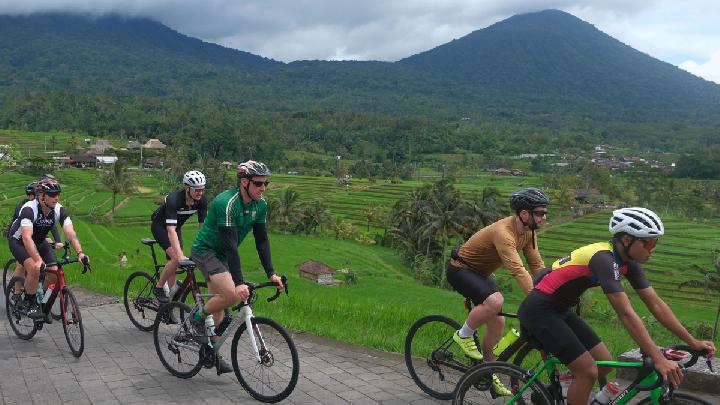
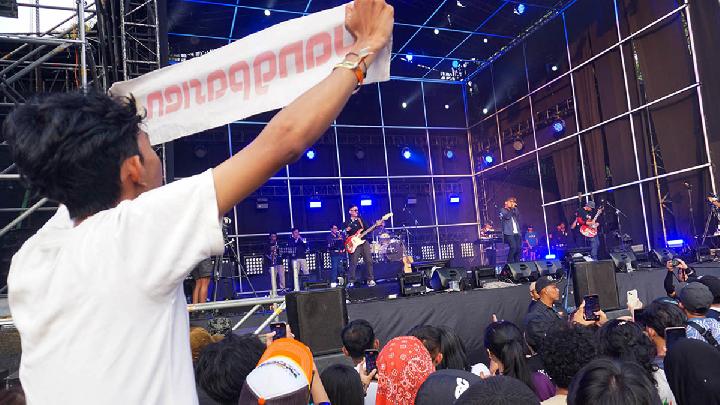
This week’s Tempo cover story confirms the BPS data. At a ratio of 32 percent, recreation is the largest component of household consumption. Padel courts—a combination of tennis and squash—have become a new sports arena for celebrities. Cinemas are packed with moviegoers. Tourist travel figures hit 1 billion people, surpassing last year’s total.
The problem is that the number of urban poor rose by 0.07 percent. According to the National Development Planning Agency (Bappenas), this increase was triggered by rises in unemployment and inflation of basic necessities. In other words, this recreation that appears to be good news was only enjoyed by a small number of middle-class city dwellers.
This inequality is apparent in the Gini index released by the BPS every March and September, which has consistently been above 0.3 and has been rising for the last five years. Only a small number of middle to high-income people are driving economic growth through expensive recreational activities. A survey of 12,000 respondents by the Center of Economic and Law Studies (Celios) in October 2025 showed that these people take vacations to relax and to revive their zest for life.
The situation is indeed bleak. Overall, the economy is gloomy. Falling public purchasing power has caused industry and business to stagnate. Entrepreneurs are holding back expansion due to high interest rates, global uncertainty, and government policies that offer no assurance.
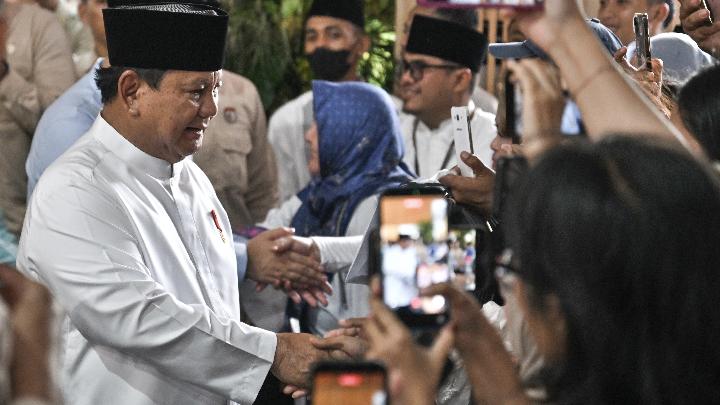
President Prabowo Subianto is increasingly concentrating power in his hands. The economic engine is driven by state-owned enterprises and corporations, not by labor-intensive private investment that provides a large number of jobs. Prabowo’s human development programs, delivered through sekolah rakyat (people’s schools) and free nutritious meals, are not only mistargeted but also mismanaged.
Only 25 percent of the huge budget allocation for the free food project has been spent. And even this relatively small amount has only been enjoyed by a small number of individuals, cronies, and those close to the authorities. As a result, the cuts in public spending caused by funds being diverted for these priority programs have not stimulated the grassroots economy.
In terms of numbers, the contributions to Indonesia’s economic growth are still at normal levels. The consumption level of 53 percent is within the healthy range of 50-70 percent of the gross domestic product (GDP). And exports at 23.64 percent and gross fixed capital formation at 29.09 percent are also within the ideal range. But this composition indicates that the economy in Prabowo Subianto’s first year in office is vulnerable and fragile.
If the foundations of the economy remain as they are next year, Indonesia will be trapped in the middle-class country illusion. We will feel rich despite not having anything. The middle classes will enjoy the recreational economy without adequate financial capacity. That people are living beyond their means is reflected in the sharp rise in consumer credit this year of 45 percent, and the fact that online loans have set a new record of Rp92 trillion, with the ratio of non-performing loans continuing to rise.
The increase in consumption by middle and upper-income groups in the leisure economy not only creates inequality, but could also trigger social segregation. Recreation could simply be an escape for the elite classes, without providing any significant multiplying effect on the economy overall. As a result, it will be difficult to achieve 8 percent economic growth. In fact, with these weak foundations, even efforts to maintain growth at 5 percent could falter.
Amid Trump's Tariffs, Indonesia Must Grow MSMEs and Rebuild the Middle Class
17 April 2025

United States President Donald Trump's "Liberation Day" tariffs could mean further erosion of Indonesia's shrinking middle class.
Middle Class Benefits from Subsidies, Incentives to Offset 12% VAT Impact: MPR
24 Desember 2024

MPR deputy chair Eddy Soeparno said the middle class has already benefited from substantial government subsidies.
Indonesia's 12% VAT Uproar, Here Are 6 Characteristics of Middle Class in the Country
27 November 2024

Indonesia's middle class group includes people with expenditure ranging from Rp2,040,262 to Rp9,909,844 per capita per month in 2024.
Today's Top 3 News: 10 Cheapest Currencies in the World 2024, Indonesia is on the List
24 November 2024

Tempo English compiled the top 3 news on Sunday, November 24, 2024.
Economists Say 12% VAT Implementation Will Burden Indonesian Middle Class Even More
24 November 2024

Several economists consider that the implementation of 12% of Value Added Tax (VAT) will further burden the middle class in Indonesia even more.
Cash Assistance to Replace Fuel Subsidy, Economist: Must Target Aspiring Middle Class
4 Oktober 2024

The former Bank Indonesia Governor claimed the cash assistance would save around Rp150-200 trillion of budget.
Social Assistance for Indonesian Middle Class, Minister: 'We're Reviewing the Possibility'
30 September 2024

The government reviews the possibility of expanding the target recipients of social assistance.
Prabowo's Future Administration Must Shelve Levies to Avoid Further Middle Class Drop, Economist Says
10 September 2024

BPS classifies the middle class in 2024 as those with income ranging from Rp2 to 9.9 million.
Jokowi on Middle Class Decline: All Countries Face Similar Issue
30 Agustus 2024

President Joko "Jokowi" Widodo stated that the decline of the middle class to the brink of vulnerable poverty is not unique to Indonesia.
Indonesian Middle Class Declines, Minister Airlangga: 'It's a Scarring Effect'
29 Agustus 2024

Indonesia's Coordinating Minister for Economic Affairs Airlangga Hartarto emphasizes that the middle class is a critical driver of the economy.