TEMPO.CO, Jakarta - The White House on Thursday was reported to have imposed "terrorist-level sanctions" on officials from the International Criminal Court (ICC) and the UN special rapporteur for Palestine, Francesca Albanese. This includes asset freezes and obstructing war crimes investigations, as reported by The Cradle.
Based on interviews with U.S. officials, the UN, and individuals, Washington seeks to punish the ICC over its investigation into U.S. and Israeli war crimes.
The targeting of the UN and ICC comes in response to demands from two U.S. technology companies involved in Israel's genocide against Palestinians in Gaza.
These companies approached the White House after receiving a warning letter from Albanese regarding their contribution to "serious human rights violations" by Israel in Gaza and the occupied West Bank.
The companies mentioned by Albanese include Alphabet, Amazon, Caterpillar, Chevron, Hewlett-Packard, IBM, Lockheed Martin, Microsoft, and Palantir.
The technology companies support the Israeli military with cloud services to operate weapon systems, including targeting bombs at Hamas members and their families, as well as neighbors in the same building.
As a result of the companies' complaint, the Trump administration in July imposed sanctions on Albanese and several ICC officials. They were added to the Office of Foreign Assets Control's Specially Designated Nationals (SDN) list, typically for terrorists, drug dealers, or weapons proliferators.
"This is unjust, unfair, and persecutorial," said Albanese in an interview in Modena, Italy, as reported by Dawn on Friday. "I’m being punished because of my human rights work."
In November 2024, the ICC issued an arrest warrant for Israeli Prime Minister Benjamin Netanyahu and former Defense Minister Yoav Gallant for war crimes in Gaza, including the use of starvation as a weapon.
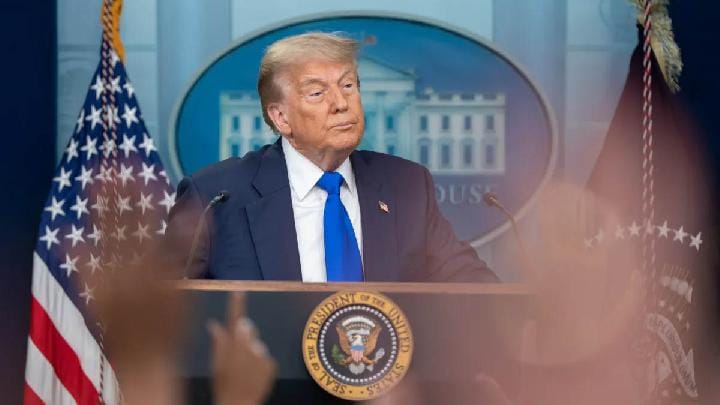
The targeting of Albanese and the ICC provides a clear picture of President Donald Trump's escalating attacks on international bodies for the sake of Israel.
Although the UN insists that Albanese has diplomatic immunity, Washington imposed sanctions over "extreme and unfounded" accusations she made and for urging the ICC to investigate U.S. companies.
"We will not tolerate these campaigns of political and economic warfare," said the U.S. State Department.
Legal experts warn that this approach sets a 'dangerous precedent' by disregarding standard diplomatic protections.
"It’s shocking that someone’s human rights work could be seen as so dangerous that they would be thought of as akin to a terrorist," said Margaret Satterthwaite, UN special rapporteur on the independence of judges and lawyers.
Internal Division
Deep internal division occurred within the U.S. government regarding these actions. While career diplomats urged restraint, senior Trump-appointed officials pushed for harsher actions.
In a March meeting, U.S. State Department officials considered limited sanctions on the ICC and Albanese.
However, David Milstein, senior advisor to the U.S. Ambassador to Israel, reportedly accused officials of "dragging their feet" in implementing Trump's orders.
Milstein urged the government to impose sanctions on all ICC officials.
The Trump administration's hostile stance is part of a broader foreign policy shift aimed at weakening international bodies seen as threats to U.S. sovereignty or business interests.
The U.S. currently owes over $2.1 billion in mandatory dues to the UN, pushing the organization toward financial collapse.
Trump has also launched the "Board of Peace," with himself as the leader, challenging the UN's diplomatic role.
Impact of Sanctions
The sanctions had swift consequences. Albanese and senior ICC figures had their bank accounts closed and credit cards canceled.
Albanese's assets in the U.S. were frozen, including a condominium in Washington, DC, valued at around $700,000. Under U.S. law, the property cannot be sold or rented.
Security became a concern. Albanese stated she had received threats, prompting the UN to tighten security for her family in Tunisia.
U.S. officials showed little sympathy. During Hanukkah celebrations, U.S. Ambassador Mike Waltz discussed the sanctions.
"I’m glad she can’t get a credit card and I’m glad she can’t get a visa to come to the United States," Waltz said, referring to Albanese.
The sanctions have caused additional harm to other judicial investigations and forced U.S. legal advisors to stop representing Palestinian human rights groups providing evidence to the courts.
The enforcement is expansive and, at times, retroactive. On August 20, the U.S. sanctioned Canadian Judge Kimberly Prost for a 2020 decision allowing an investigation into U.S. personnel in Afghanistan, despite the investigation being inactive.
"I was somewhat surprised that I would be sanctioned for something I had done five years ago," Prost said, citing being listed as involved in terrorism as "psychologically difficult to accept."
The U.S. sanctions on the ICC are clearly an effort to "cripple an institution," said Nancy Combs, an international law professor at the William & Mary Law School.
She described it as part of the Trump administration's view that the American people benefit when "not constrained by weak and feeble international norms."
Read: Trump Authorizes Tariffs on Iran's Trade Partners
Click here to get the latest news updates from Tempo on Google News