TEMPO.CO, Jakarta - The United States (US) military claims it shot down an Iranian drone approaching a US aircraft carrier in the Arabian Sea, amid ongoing efforts by regional powers to defuse tensions between Washington and Tehran.
In a statement on Tuesday, as reported by Al Jazeera, US Central Command (CENTCOM) spokesman Tim Hawkins said a US fighter jet from the USS Abraham Lincoln "shot down the Iranian drone in self-defense and to protect the aircraft carrier and personnel on board."
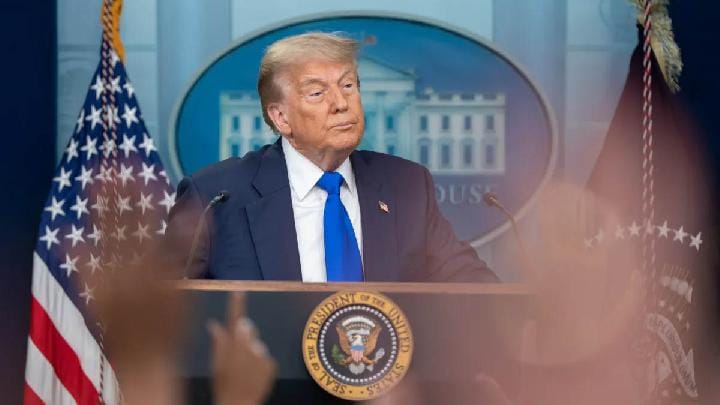
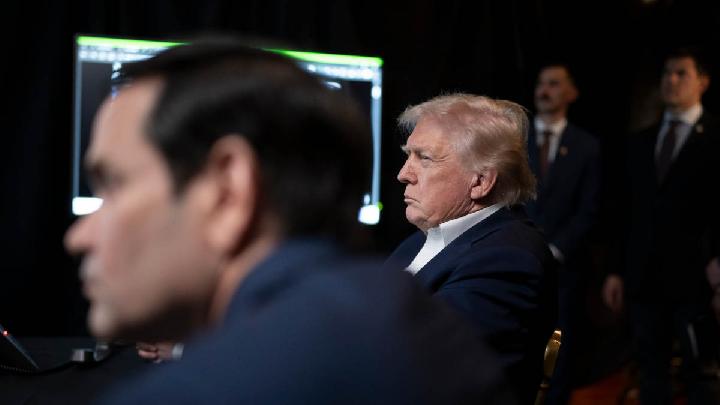
The incident comes as diplomats are working to organize nuclear talks between Iran and the United States. Tensions between Tehran and Washington have eased following US President Donald Trump's repeated threats to attack Iran over its recent crackdown on anti-government protests.
Trump, who has also been pushing Iran to agree to talks on its nuclear program, dispatched the USS Abraham Lincoln toward Iran last week, sparking fears of a possible military confrontation.
However, amid days of diplomatic efforts, Iranian President Masoud Pezeshkian said on Tuesday that he had instructed the country's foreign minister to "pursue fair and equitable negotiations."
"I have instructed my Minister of Foreign Affairs, provided that a suitable environment exists – one free from threats and unreasonable expectations – to pursue fair and equitable negotiations, guided by the principles of dignity, prudence, and expediency," he wrote on social media.
"These negotiations shall be conducted within the framework of our national interests," Pezeshkian added.
The drone downing does not appear to alter plans for the talks, which are expected to take place on Friday, February 7, 2026, in Istanbul.
Venue Change
However, Iran on Tuesday, as reported by Al Arabiya, demanded that this week's talks with the US be held in Oman, not Turkey. Tehran also demanded that the scope of the talks be narrowed to two-way negotiations on nuclear issues, a regional source said.
Regional actors have been pushing for a resolution to the impasse, which has led to threats of reciprocal US-Israeli-Iranian airstrikes, raising fears of escalation into a wider war.
Iran's Tasnim news agency quoted a Foreign Ministry spokesman as saying that consultations were underway to select a meeting venue, with Turkey, Oman, and several other countries in the region having offered to host.
In an interview with Fox News on Tuesday morning, White House Press Secretary Karoline Leavitt also said that Trump's special envoy, Steve Witkoff, was "scheduled to hold talks with the Iranian side later this week."
"That meeting is still scheduled at this time," Leavitt said.
Iranian officials have repeatedly stated that they are open to nuclear talks, but only if the Trump administration ends its threats against the country.
Iranian officials have said they want the negotiations to focus on the country's nuclear program, while Washington reportedly wants to discuss a range of issues, including Iran's ties with regional armed groups and its ballistic missile and defense programs, which are seen as threatening Israel, a close US ally in the Middle East.
Tehran has also said it wants the talks to be bilateral—with Washington only—while the US has shown more willingness to involve other regional powers.
A source familiar with the situation said Tuesday that Trump's son-in-law, Jared Kushner, is scheduled to participate in the talks, along with US Special Envoy Steve Witkoff and Iranian Foreign Minister Abbas Araghchi.
Ministers from several other countries in the region are also expected to attend.
An Iranian diplomatic source previously said that Tehran's outlook on the talks is neither optimistic nor pessimistic. He added that the Islamic Republic's defense capabilities are non-negotiable and that it is prepared for any scenario.
"It remains to be seen whether the United States also intends to conduct serious, results-oriented negotiations or not," the source said.
Tensions in the Strait of Hormuz
In a separate incident on Tuesday, CENTCOM accused Iran's Islamic Revolutionary Guard Corps (IRGC) of harassing a US-flagged and US-manned merchant vessel in the Strait of Hormuz, a crucial Gulf waterway for global trade.
"Two IRGC boats and an Iranian Mohajer drone approached M/V Stena Imperative at high speeds and threatened to board and seize the tanker," said Hawkins, the CENTCOM spokesman.
Iran's semi-official Fars news agency quoted unnamed Iranian officials as saying later that day that a ship had entered Iranian territorial waters without the necessary legal authorization.
The officials said the ship had been warned and left the area “without any special security incidents occurring.”
Anti-Government Protests
The US naval deployment near Iran follows claims of a crackdown on anti-government demonstrations last month.
Trump, who has stopped short of threatening intervention, has since demanded nuclear concessions from Iran and sent a flotilla to its shores. He said last week that Iran was “serious in discussions,” while Tehran’s top security official, Ali Larijani, said arrangements for negotiations were underway.
The priority of diplomatic efforts is to avoid conflict and defuse tensions, another regional official said.
Regional powers including Pakistan, Saudi Arabia, Qatar, Egypt, Oman, and the United Arab Emirates were also invited, he said. But given Iran’s latest demands, it is unclear whether their participation will continue.
Iran's leadership is reportedly increasingly concerned that a US strike could break its grip on power by pushing an already angry public back onto the streets, according to six current and former Iranian officials.
The officials told Supreme Leader Ali Khamenei that public anger over last month's crackdown – the bloodiest since the 1979 Islamic Revolution – had reached a point where fear was no longer a deterrent, according to four officials briefed on the discussions.
In June, the United States attacked Iranian nuclear targets, joining in at the end of a 12-day Israeli bombing campaign. Since then, Tehran has said its uranium enrichment work – which it says is for peaceful, not military, purposes – has been halted.
Iranian sources said last week that Trump has demanded three conditions for resuming talks: Zero uranium enrichment in Iran, curbs on Tehran's ballistic missile program, and an end to its support for regional proxies.
Iran has long said all three demands constitute an unacceptable violation of sovereignty, but two Iranian officials said its clerical rulers see the ballistic missile program, not uranium enrichment, as the greater obstacle.
An Iranian official said: "Diplomacy is ongoing. For talks to resume, Iran says there should not be preconditions and that it is ready to show flexibility on uranium enrichment, including handing over 400 kg of highly enriched uranium (HEU), accepting zero enrichment under a consortium arrangement as a solution."
Tehran's regional influence has been weakened by Israel's attacks on its proxies – from Hamas in Gaza to Hezbollah in Lebanon, the Houthis in Yemen and militias in Iraq – as well as the overthrow of Iran's close ally, Syria's former president Bashar al-Assad.
Read: Israel Pushes US to Strike Iran Despite Trump's Reluctance
Click here to get the latest news updates from Tempo on Google News