April 19, 2026 | 02:41 pm

The threat of a climate crisis is looming. The government’s response still falls short.
THE government’s commitment to preventing a climate crisis is questionable. Instead of reducing emissions to curb global warming through reforestation and restoration, the government appears to be turning a blind eye to massive deforestation and land degradation.
The evidence is clear. Throughout 2025, the area of deforestation doubled compared with the previous year. Auriga Nusantara Foundation, an environmental non-governmental organization, recorded a total of 433,751 hectares of deforestation—equivalent to six times the area of Jakarta. It was driven not only by the expansion of mining and oil palm plantations, but also by the government’s strategic projects, including the food estate program. The project, championed by the Prabowo Subianto administration, is believed to have caused over 79,000 hectares of forest damage.
In its Nationally Determined Contribution (NDC) document, the government aims to reduce greenhouse gas emissions by 31.89 percent through domestic efforts and by 43.20 percent with international support by 2030. Of the target, the forestry and other land use (FOLU) sector is expected to make a significant contribution—17.4 percent independently and 25.4 percent through global cooperation.
However, as the rate of deforestation continues to rise, including due to government projects themselves, the emission reduction targets remain a distant goal. Without serious steps to curtail deforestation through consistent mitigation policies, such as measured reforestation and strict forest protection, the emission reduction ambitions will be nothing more than rhetoric.
The government has indeed introduced carbon trading as one of its instruments for reducing emissions. However, the mechanism is not without problems. In practice, carbon trading tends to be dominated by elites who view it as a new economic opportunity. Meanwhile, indigenous communities are often treated merely as bystanders, not as key players. Ironically, the very industries responsible for emissions are entering the business, giving the impression that carbon trading is merely a form of “greenwashing.”
Looking ahead, the challenges will be increasingly complex. The National Research and Innovation Agency (BRIN) forecasts a Super El Niño, or “Godzilla El Niño,” may emerge in the second half of this year through next year. The phenomenon can potentially trigger prolonged droughts, forest and land fires, as well as serious disruptions to food security.
Without mitigation preparedness, the combination of massive deforestation and extreme weather conditions risks exacerbating environmental damage and increasing carbon emissions. The 2015 forest fires, which burned about 2.6 million hectares of land, should serve as an important lesson to prevent similar disasters from recurring.
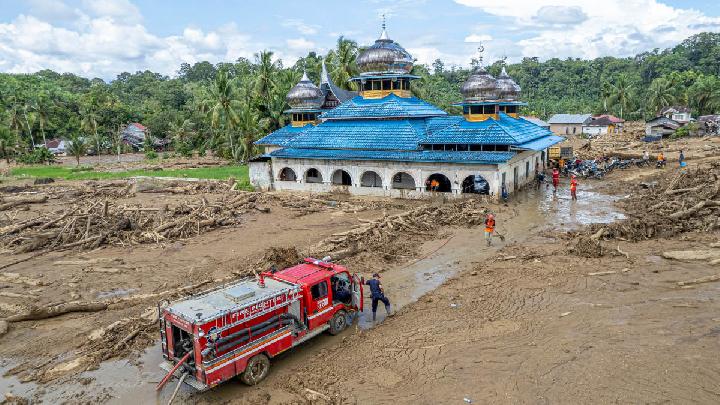
The threat of a climate crisis is no longer a distant specter. Its impacts are already evident and directly affecting people’s lives. The landslides and flash floods that claimed many lives in Sumatra not long ago serve as a stark reminder that environmental degradation—caused by land clearing and the exploitation of natural resources—is increasingly heightening the risk of disasters.
Therefore, the government can no longer afford to act half-heartedly. Efforts to control deforestation and reduce emissions cannot rely on mere statements. A decisive shift in policy direction is needed to prevent the climate crisis from worsening.
Causes of Tidal Floods on the Northern Coast of Java
26 Desember 2025

Tidal flooding affecting many regions is driven by the climate crisis. Global warming is triggering the more frequent formation of tropical cyclones.
The Wrong Way to Adapt to the Climate Crisis
24 Desember 2025
Natural disasters caused by the climate crisis cannot entirely be prevented. Stop policies that worsen the destruction.
2025 Set for Second-Hottest Year on Record
9 Desember 2025
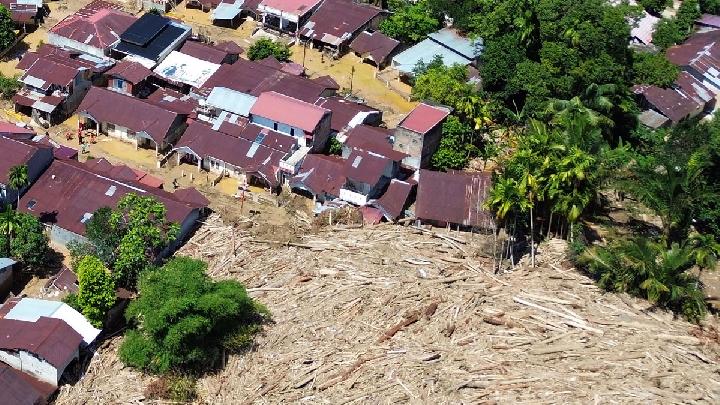
This year is expected to match 2023 as one of the warmest on record, second only to 2024, EU scientists warn.
Africa's Forests Shift from Carbon Sinks to Emission Sources, Says Study
30 November 2025

A recent study has revealed how the forests in Africa have now transformed into a source of carbon emissions.
COP30 Puts a Just Clean Energy Transition Center Stage; Is Indonesia Being Contradictory?
12 November 2025
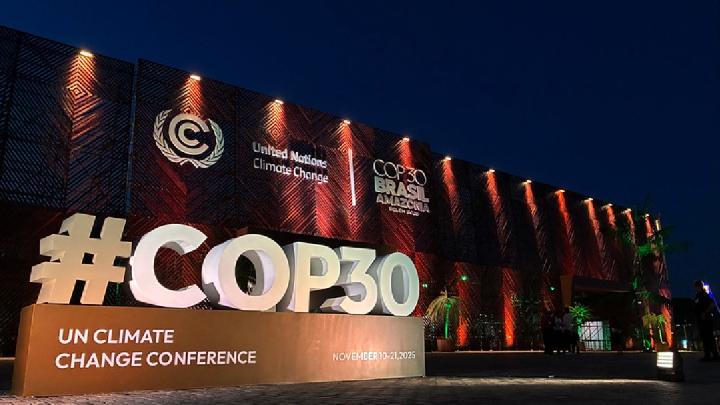
There is no more reason for many countries in the world to delay their commitment to the Paris Agreement by transitioning to clean energy.
Scientists Urge World Leaders to Curb Biofuel Growth Ahead of Brazil's COP30
5 November 2025
Over 100 members of the global scientific community have warned the world of the dangers of unrestrained biofuels production.
Indonesia to Participate in 7 Key Talks at COP30, What Are They?
4 November 2025
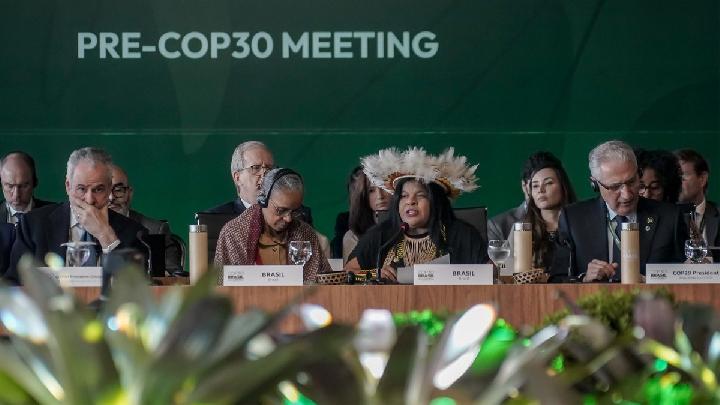
A delegation of 450 people from Indonesia will participate in COP30 in Brazil this month.
The Dark Side of Carbon Trading
31 Oktober 2025

The Prabowo administration is counting on carbon trading as its climate policy. It opens the door to greenwashing.
The Future Is Still Ours to Shape
8 September 2025

If economic choices continue to make the majority suffer, the existing crisis will only deepen.
Climate Crisis Compels Indonesians to Seek Work Abroad, Says Migrant Workers Union
27 Agustus 2025

SBMI highlights the impact of climate crisis on Indonesian citizens, pushing them to work abroad as migrant laborers due to the deterioration of their livelihoods in the country.