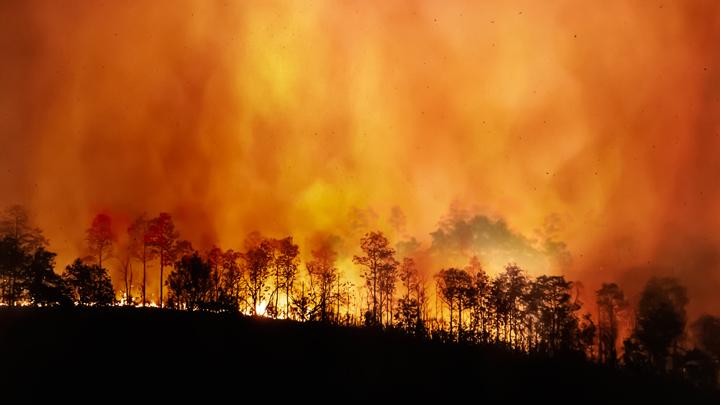
TEMPO.CO, Jakarta - From Spain and France to Portugal, Greece and Italy, the list of European countries affected by particularly severe wildfires is long. It even includes colder states such as the UK, Ireland and Norway.
This summer, extreme heat and prolonged drought have heightened the risk of wildfires, which have destroyed more than 6,000 square kilometers of forest and forced hundreds of thousands to leave their homes. By early August, the damage carried an estimated price tag of €15 billion ($17.5 billion).
And according to a study published today by the Potsdam Institute for Climate Impact Research (PIK), the coming decades are likely to see the wildfire risk in Europe worsen.
Annual burned area could triple
The researchers found that even with significantly stronger climate action, 39% more land could be burning annually by the end of the century than it is today.
"If we continue to produce more emissions and global temperatures rise by around 3.6 degrees Celsius (6.48 Fahrenheit), wildfires will become much more frequent, especially in the Mediterranean region and across large parts of western and central Europe, including areas that have experienced few fires so far," said PIK researcher Maik Billing, lead author of the study published in the scientific journal Global Change Biology.
The international community originally agreed to limit global warming to 1.5 degrees Celsius, or at least to well below 2C. However, countries are still falling far short on their climate targets.
At the same time, the effects of global warming are becoming increasingly visible. According to the study, by early August, twice as much land had already burned in Europe during this summer's heatwave season than in recent years.
Fire prevention could save seven times its costs
Yet Thomas Hickler, a researcher at the Senckenberg Society for Nature Research, which contributed to the study, says Europe is not powerless in the face of this growing threat.
"We see fire-conducive conditions increasing, so we need to invest more," he said.
Wildfire management, improved training and equipment for emergency responders, as well as stronger coordination between forestry authorities, conservation bodies and fire services can "make a substantial difference," according to Hickler.
The European Union's contribution to forest and wildfire management programs in member states between 2021 and 2027 is around €2.1 billion. And according to World Bank estimates, such investments can pay off — with every euro spent on prevention saving up to seven euros on firefighting and reconstruction.
The role of polluting emissions
If the greenhouse gas emissions generated by burning fossil fuels to power our homes and industries were to fall rapidly and sharply limit global warming, effective fire management could reduce future burned areas by as much as 90%.
However, the study argues that significantly stronger climate action will still be necessary if wildfires are to remain under control in the long term.
"Climate change could create conditions so extreme that we reach the limits of what is still feasible in preventing and fighting fires once they grow beyond a certain size," said Kirsten Thonicke of PIK, a co-author of the study.
Meanwhile wildfires have been burning for days in western Germany and neighboring Belgium.
In the High Fens, a cross-border forest and wetland region connecting the two countries, around 3,000 hectares of vegetation have been scorched in recent days. It is the largest wildfire Belgium has seen in decades.
Why wetlands burn too
Wetlands such as marshes and raised bogs may seem safe from fire. But when they dry out during droughts, as is currently happening in the High Fens, their peat soil, which is formed from an accumulation of dead plant material, makes them vulnerable to fire .
For centuries, peat was used as fuel for heating and cooking. But it's also highly polluting. When layers of peat several meters thick burn, carbon that has been stored in the soil for thousands of years can be released in a very short time.
Although wetlands cover only about 3% of the Earth's surface, they store around 30% of the carbon contained in soils worldwide.
While conventional forest fires are often characterized by high flames, peat ones smoulder underground. They burn at relatively low temperatures, produce large amounts of smoke but often have barely visible flames. And they are extremely difficult to extinguish, sometimes persisting for months and even continuing to burn through the winter.
They also release large quantities of pollutants, including smoke particles and hazardous heavy metals such as mercury.
Massive peat fires in Canada and Siberia in recent years have demonstrated the scale such fires can reach. A peat fire in Indonesia in 1997, which affected roughly 100,000 square kilometres, ranks among the largest environmental disasters of the 20th century.
In a study published in Nature, scientists estimated that this single fire may have released between 13 and 40% of total global emissions in 1997.
Across Indonesia and neighboring countries, more than 200,000 people were treated in hospitals for acute health problems. As a direct consequence of this and other major fires, several Southeast Asian nations adopted an agreement aimed at combating transboundary air pollution a few years later.
For Europe, the new study delivers a clear message: if global temperatures continue to rise as scientists predict, improved wildfire management may help limit the danger but will not be enough to eliminate it.