By RJ Lino, former president director of PT Pelindo II.
There are moments in history that feel less like records and more like something we once knew by heart, but slowly forgot.
I often find myself imagining what Thomas Stamford Raffles would feel if he could stand today along the northern coast of Java. In The History of Java, written during his years on this island, he described a place so alive, so balanced, that it almost feels distant from what we see today. He wrote of rivers that flowed gently across the land, of mangroves that stretched along the coastline, and of mountains rising in the south, wrapped in layers of green that seemed without end. “Its verdure is perpetual,” he wrote, words that were not poetic exaggeration, but a quiet observation of a living system in harmony.
Even in the dry season, water remained. Even in the heat, the air stayed gentle. The rivers carried life into terraced fields, feeding not only crops, but a civilization that understood how to live with its environment, not against it. Java, at that time, was not simply beautiful. It was complete.
Today, Java carries more than 160 million people within a space that was never designed to hold such weight. It is not merely dense, it feels strained, as if the island itself is trying to keep up with the demands placed upon it. But the true challenge is not the number of people; it is the quiet shift away from a system that once worked effortlessly with nature. The rivers still flow north, just as they always have, but what they carry has changed. They no longer bring life; they carry what we choose to discard. In the rainy season, water arrives all at once, overwhelming cities and plains. In the dry season, it disappears, leaving behind scarcity and uncertainty. What was once a blessing has become a contradiction, too much when we cannot contain it, too little when we depend on it.
Above this fragile balance, movement has become heavy and forced. Roads are crowded beyond reason, filled with trucks that carry the weight of an entire economy. Between Jakarta and Surabaya, nearly everything still moves by land, despite being on an island defined by water. It is a paradox we have come to accept without question. We often say that trucking is the cheapest option, but that belief quietly ignores the hidden costs, the time lost in congestion, the air that grows heavier each year, the energy consumed to maintain a system that is constantly under pressure. What we call efficiency is, in many ways, simply habit.
And yet, there was once a different way of seeing this island, through the eyes of a man who belonged to it in a way that was both technical and deeply personal. Professor Doctor Ingenieur Willem Johan van Blommestein was not merely an engineer; he was, in many ways, a son of Java. As a mixed Indo-European, his life was shaped between cultures, but always anchored in a quiet affection for this island.
He trained as an engineer at the Bandung Institute of Technology — then known as the Technische Hoogeschool te Bandoeng — at a time when the faculty was still predominantly Dutch. He went on to earn his doctorate in 1939 at Delft University of Technology, one of the world's foremost engineering institutions. A decade later, in 1949, he returned to the Netherlands for good; his Dutch background had made it untenable to pursue a senior career in newly independent Indonesia.
But before he left Indonesia, he had already left something far more enduring.
During his years in Java, he was involved in the planning of some of the island’s most important dams, structures that quietly sustain millions of lives to this day. He held senior positions in several waterway organizations in Indonesia, from the Dutch East Indies Department of Public Works to the Department of Waterways and Reconstruction. Among the projects that he was involved in were Jatiluhur, Karangkates (Sutami), Kedung Ombo, Gajah Mungkur, and Selorejo. These were not merely engineering works; they were expressions of a belief that water, if understood properly, could sustain an entire civilization.
And yet, even after leaving, Java never left him.
In the later years of his career in Delft, as he approached retirement, he returned, at least in thought, to the island he loved. It was there, far from Java but still deeply connected to it, that he wrote a paper titled “Memakmurkan Jawa” - Prospering Java.
What he proposed was not just an infrastructure project. It was a quiet attempt to restore balance.
He understood something that feels almost obvious once it is said: Java was never meant to fight water, it was meant to live with it. From that understanding came an idea that was both simple and profound, a continuous canal along the northern coast of Java, stretching from Jakarta to Surabaya. Not as a standalone project, but as a way to reintroduce balance into a system that had drifted too far from its natural logic.
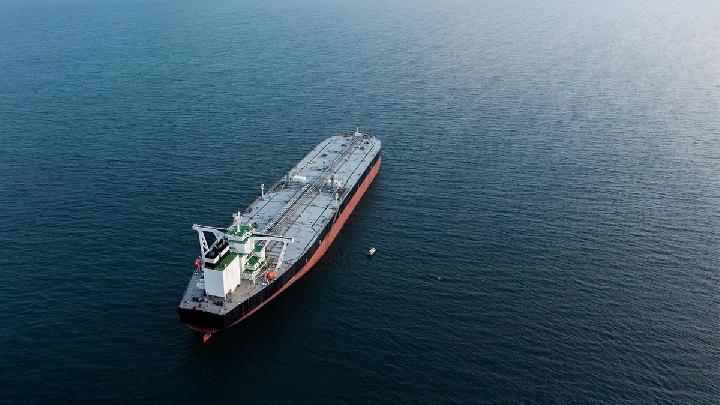
In this vision, water would no longer be rushed out to sea, but gently held and managed, becoming a reliable source for both life and agriculture. Floods would no longer arrive as recurring disasters, but be absorbed into a system designed to receive them. The coastline would not remain exposed, but be protected against the slow, inevitable rise of the sea. And perhaps most transformative of all, movement itself would change. Goods would no longer be forced across land in endless lines of trucks, but carried steadily by water, moving with a rhythm that feels less like effort and more like flow.
This is not an abstract idea. In places like the Port of Rotterdam and the Port of Antwerp, such systems already exist. There, water is not seen as a barrier, but as the most natural and efficient path for movement. Nearly half, sometimes more, of all goods travel through inland waterways, not because it is nostalgic, but because it is simply the most sensible way.
The question, as always with ideas of this scale, is where to begin. Large transformations rarely start as large actions. They begin with small, deliberate shifts that point in a different direction. The Cikarang Bekasi Laut Canal offers one such beginning. It may appear modest, but its meaning is far greater than its scale. It reminds us that not everything must move by road, that water still holds the capacity to carry, and that a different system is not only possible, but already within reach. From Cikarang, it can extend further, to Karawang, to Cikampek, and eventually beyond, not as an ambitious leap, but as a natural progression.
Perhaps what we are trying to build is not something entirely new. Perhaps it is something we once understood, something that lived quietly within the landscape before we replaced it with systems that no longer fit. Java was never meant to be dominated by roads. It was shaped by rivers, by water, by a balance that did not need to be engineered, only respected.
To prosper, Java is not to force it into a different form.
It is to remember it. And in that quiet act of remembering, perhaps we begin to find our way back. We may forget our nature, but our nature never forgets us.
*) DISCLAIMER
Articles published in the “Your Views & Stories” section of en.tempo.co website are personal opinions written by third parties, and cannot be related or attributed to en.tempo.co’s official stance.