February 23, 2026 | 11:52 am
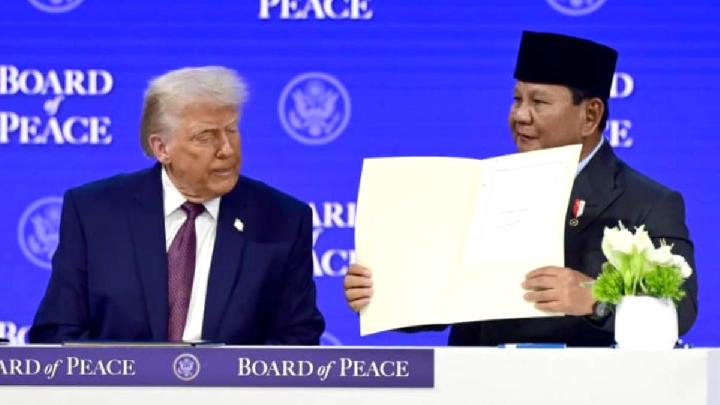
TEMPO.CO, Jakarta - The Coordinating Ministry for the Economy promises the Indonesian government will not relax the ban on exporting raw commodities with the existence of a reciprocal trade agreement.
"Indonesia will not open the export of critical mineral raw materials to the United States," said the Spokesperson for the Coordinating Ministry for the Economy, Haryo Limanseto, in a written statement on Sunday, February 22, 2026.
Critical mineral sectors emerge in the Agreement on Reciprocal Trade (ART) document, signed by President Prabowo Subianto and U.S. President Donald Trump.
The U.S. demands the removal of export limitations on these commodities. "To strengthen supply chain connectivity between the Parties, Indonesia shall remove restrictions on exports to the United States of industrial commodities, including critical minerals," reads one of the points in a document uploaded by the U.S. Trade Representative's Office (USTR) on February 19, 2026.
In response to this clause, Haryo stated that the reciprocal trade agreement encourages U.S. companies to collaborate with Indonesian companies in implementing downstream policies and developing processing industries for critical minerals and rare earth metals.
Haryo explained that the exported products are commodities that have been processed after U.S. companies have conducted mining and processing in Indonesia. He stated that this mechanism is similar to current business practices and complies with existing regulations.
The direct request from the U.S. to remove restrictions on exporting raw minerals raises questions about the longstanding policy of banning the export of raw minerals, such as nickel.
Executive Director of the Center of Reform on Economics Indonesia (CORE), Mohammad Faisal, sees this agreement as contradictory to the downstreaming program that the Indonesian government has been promoting.
Faisal believes that if the government agrees to this, it would be a step backward. "However, we can engage in downstreaming for nickel because of the ban on the export of its ore," said Faisal to Tempo on February 20, 2026.
Additionally, Faisal believes this policy could create perceptions of differential treatment. This step could also set a bad precedent for other investors and disrupt the investment climate.
He sees the request for cooperation in managing downstream production as an effort by the US to compete with China's dominance. China has long been considered to dominate the supply of critical minerals such as nickel, copper, and other rare earth elements. This step is crucial because critical minerals are essential raw materials for high-value manufacturing processes, such as those used in semiconductor or technological product production.
Ilona Estherina contributed to this article
Read: US Demands Indonesia to Lift Critical Mineral Export Restrictions
Click here to get the latest news updates from Tempo on Google News
Indonesia Expects Surge in US Exports After Trade Deal
2 hari lalu
Indonesia's exports to the US is expected to climb after the signing of the Agreement on Reciprocal Trade on Friday morning.
US Demands Indonesia to Lift Critical Mineral Export Restrictions
2 hari lalu
The removal of restrictions on the export of critical minerals is included in the Agreement on Reciprocal Trade between Indonesia and the U.S.
Indonesia's Zero-Tariff Textile Exports to the US Explained
2 hari lalu
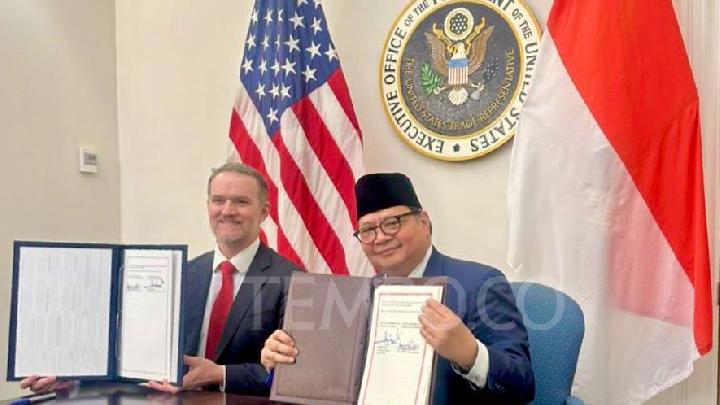
Minister Airlangga says the deal could benefit 4 million textile workers and up to 20 million Indonesians including their families.
Indonesia Exports Rp2.4 Billion in Tylenol to South Korea
8 hari lalu
Indonesia marks a milestone with its first export of Rp2.4 billion in Tylenol to South Korea.
AGO: CPO Export Graft Causes Up to Rp14 Trillion in Losses
12 hari lalu
The Attorney General's Office (AGO) says that auditors have tentatively calculated the state financial losses at Rp10 trillion to Rp14 trillion.
AGO Names 11 Suspects in CPO Export Corruption Case
12 hari lalu
The Attorney General's Office (AGO) has named 11 suspects in an alleged corruption case involving crude palm oil (CPO) exports.
Indonesia-Australia Agree on Customs Mutual Recognition Agreement
14 hari lalu
The agreement between the Directorate General of Customs and Excise and Australia aims to expedite trade flows while strengthening international supply chain security.
Indonesia Eyes Southeast Asia for Rice Exports
15 hari lalu

Indonesia's Logistic Affairs Agency (Bulog) plans to export approximately one million tons of rice this year.
United States Leads Indonesia's Trade Surplus
16 hari lalu
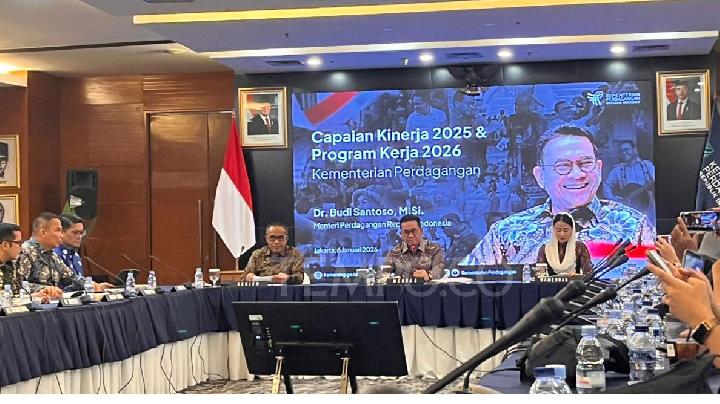
Indonesia's trade surplus with the United States reached $18.11 billion, surpassing India, which used to occupy the top position.
Indonesian Customs Revenue Reaches Rp300.3 Trillion in 2025
21 hari lalu
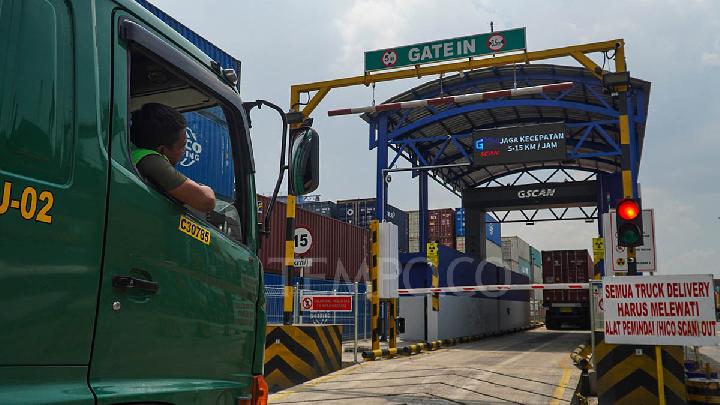
Indonesia's Directorate General of Customs and Excise recorded state revenue from the customs and excise sector of Rp300.3 trillion throughout 2025.