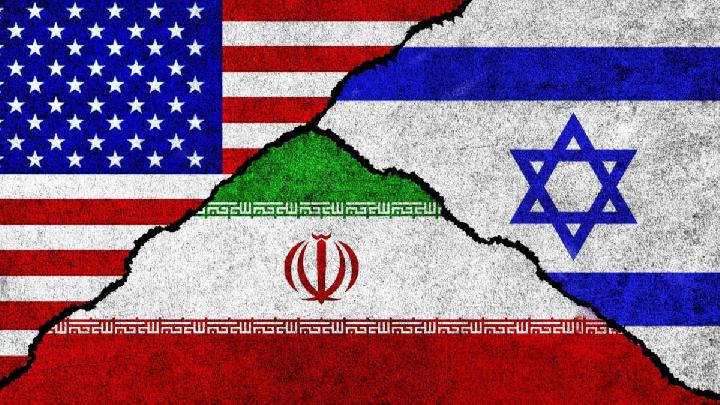
TEMPO.CO, Jakarta - The war in the Middle East has left global investors grappling with the impact of a drawn-out regional conflict on global energy supplies and its potential to stoke inflation around the world.
Global stock markets have fallen and oil and gas prices have soared since Monday, the first day of trading after US and Israeli attacks on Iran on Saturday (February 28) and Iran's response by targeting major oil and gas infrastructure in the region.
Brent crude rose about 7% on Tuesday to breach $80 (€69) a barrel, having soared by as much as 13% at one stage on Monday. Gas prices in Europe jumped more than 50% on Monday, the fastest pace since the outbreak of war in Ukraine.
Much of the investor attention continues to be on the Strait of Hormuz, a key chokepoint accounting for around 20% of global oil supply and large quantities of gas. An official from Iran's Revolutionary Guards said the waterway is closed and that Iran "will set fire to any ship attempting to pass through the Strait."
However, Bloomberg reported that China was pushing Iran to keep the strait open to tanker traffic. China, the world's largest oil and gas importer, is among the most exposed countries, as the strait is the source of half of China's oil imports.
Insurance companies cancel war risk coverage for ships
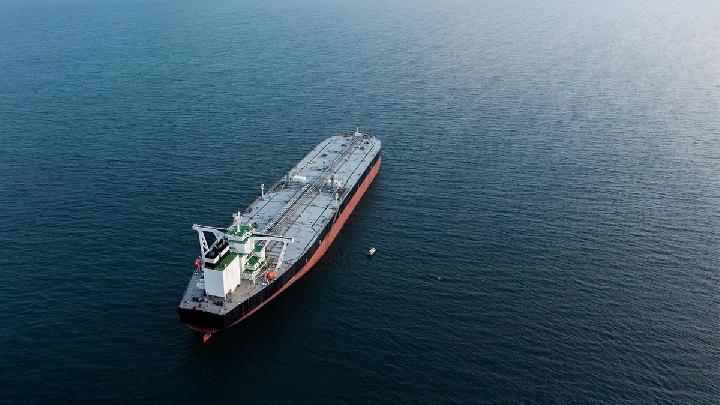
While the Strait of Hormuz remains technically open, tanker traffic through it has effectively come to a standstill as oil shippers and traders have suspended energy shipments through the waterway due to safety concerns and prohibitive insurance costs amid Iranian attacks on oil tankers in the region.
Marine insurers are canceling war risk coverage for vessels in the Middle East Gulf, and oil shipping rates have been surging.
Companies including Gard, Skuld, NorthStandard, the London P&I Club and the American Club said their cancellations would take effect from March 5. This means that shipping firms will have to find new insurance cover at higher rates.
More than 150 vessels, including oil and LNG tankers, have anchored in the Strait of Hormuz and surrounding waters, severely constraining global oil and gas supply.
Iranian attacks on Gulf oil and gas facilities
Iranian strikes on key energy facilities in the region are also adding to supply worries.
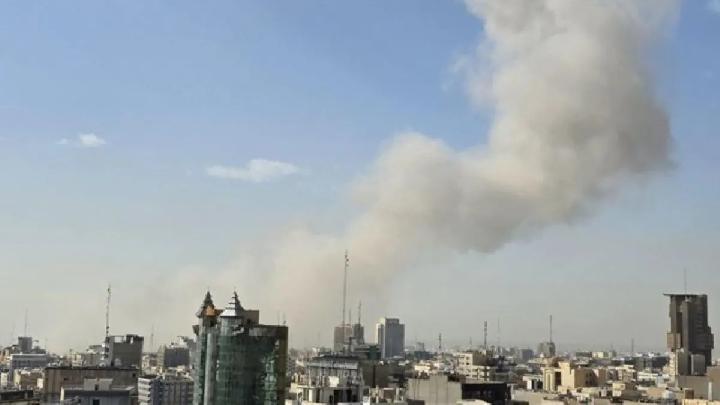
Saudi Arabia's Aramco shut its biggest domestic oil refinery on Monday after it was targeted by Iranian drones. Qatar's state-run energy firm QatarEnergy, one of the world's top natural gas producers, halted LNG output following Iranian attacks on facilities at two of its main gas processing bases.
A fire broke out in an oil industrial facility in the United Arab Emirates' Fujairah on Tuesday, as forces intercepted a drone attack, authorities said.
Despite the escalation, there are signs investors are still pricing the conflict as temporary rather than protracted, Deutsche Bank analysts wrote in a note to clients.
"In particular, it has mainly been the front end of energy curves that have seen sharp spikes, while longer-dated contracts have moved much less," they said.
Bridget Payne, Head of Energy Forecasting at Oxford Economics, said, "The oil market is well placed to manage the impact from Iran. The market is well supplied, and Iran is unlikely to sustain a disruption that is both severe and prolonged, making a full-blown oil crisis unlikely."
Payne expects Brent crude to average $79 per barrel in the second quarter, before easing as supply resumes by the end of the quarter. That compares to the $100-per-barrel forecasts made by experts in the event of a protracted war and disruption.
"Trade rather than production disruption is the key risk: spare capacity in Saudi Arabia and the UAE can offset lost Iranian production, but alternative trade routes can reroute only around a third of normal Strait of Hormuz oil flows," Payne said.
Asian economies most vulnerable to higher energy prices
The war in the Middle East poses a particular risk to Asian economies, which rely heavily on oil and gas from the region. Higher energy prices could drive up prices in those countries
Eighty-four percent of the crude oil and condensate [ a lighter form of oil associated with the extraction of crude oil — the ed.] and 83% of the LNG that moved through the Strait of Hormuz went to Asian markets in 2024, according to the US Energy Information Administration (EIA). China, India, Japan, and South Korea were the top destinations.
China buys nearly 90% of Iran's sanctioned oil. However, the loss of Iranian oil production would not be as significant a setback for China — Iran supplies only 11% of China's imported crude — as a sustained disruption to shipping through the Strait of Hormuz.
"That gives China a vested interest in keeping energy flowing in the region," said Gareth Leather, senior Asia economist at Capital Economics. "That is one reason to think that China may not step up support to help Iran, a longstanding geopolitical ally, sustain its response to the US and Israeli attacks in the way that it did for Russia after the invasion of Ukraine."
Iran war also poses risks to Europe
Europe's greater exposure to the energy shock in the Middle East than the US has seen the euro weakening sharply against the dollar this week, amid worries that a prolonged disruption could cause a spike in eurozone inflation and derail the fragile economic recovery.
Europe is more exposed to the developments in the gas market. Not only because it is a major market for LNG from Qatar, but also because the disruption to Qatari LNG exports would force Asian buyers to compete with Europe for cargoes. This would further drive up prices and impede Europe's ability to refill gas storage after a cold winter.
The European gas benchmark Dutch TTF front-month contract jumped 38.9% to €61.77 a megawatt-hour on Tuesday, the highest level since early 2023.
"With Qatari LNG output halted and the Strait of Hormuz closed, global LNG supply is set to tighten sharply, a trend already reflected in recent price movements," said Rystad Energy analyst Jan-Eric Fähnrich.
"The scale of lost volumes will depend on the extent of any infrastructure damage, which is still being assessed, and the duration of the Strait's closure to maritime traffic," he added.
Read: Can China Benefit from the US-Israel War with Iran?
Click here to get the latest news updates from Tempo on Google New