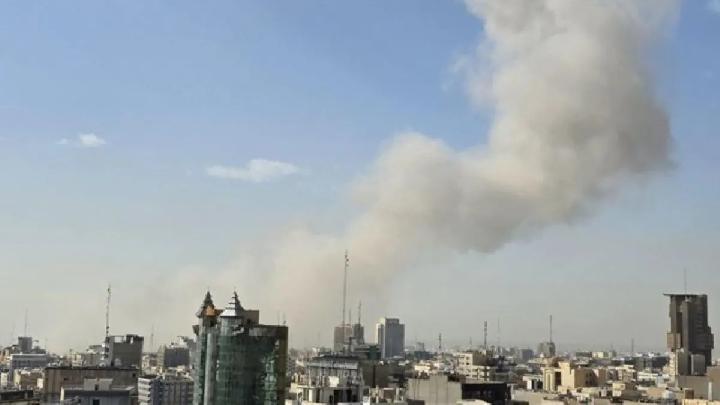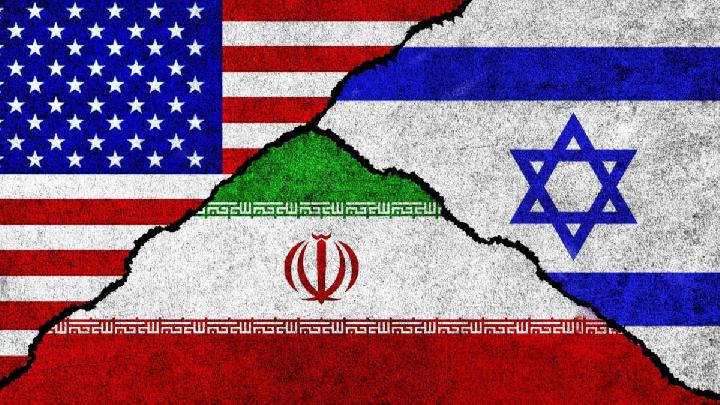
TEMPO.CO, Jakarta - When the US and Israel began pounding Iran on February 28, people in Tehran stood on their roofs and cheered. This reaction from Iranians was not one that one would expect, given the war's controversial nature under international law and how the Iranian government regards the US and Israel as bitter enemies.
Many Iranians are, however, willing to accept civilian deaths and destruction if it means toppling their despised theocratic regime. While the US made various contradictory statements over its war objective, regime change remains a possibility.
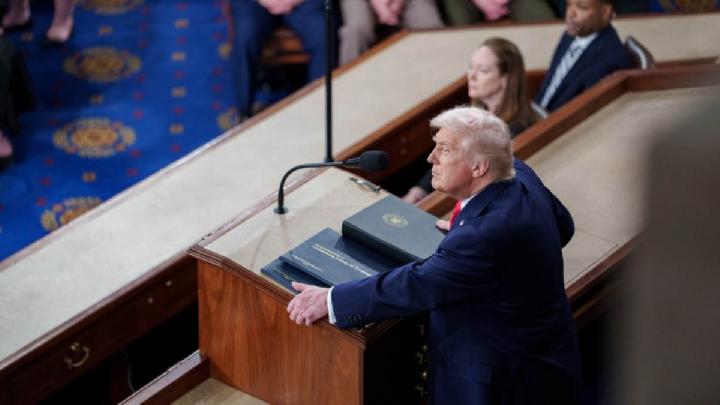
US President Donald Trump appealed directly to Iranians who had staged mass anti-government protests in January, telling them to stand up. " When we are finished, take over your government. It will be yours to take. This will be probably your only chance for generations."
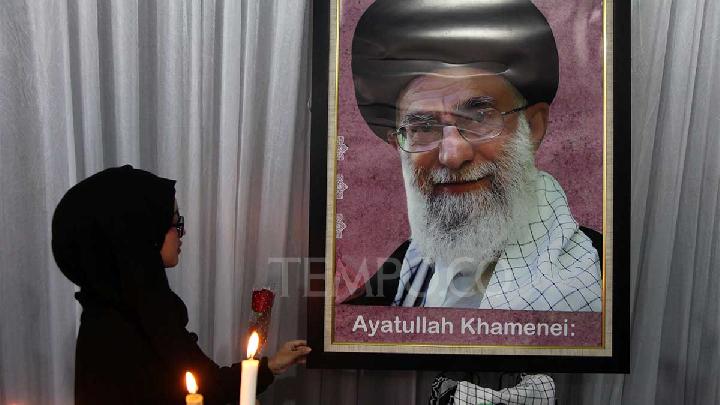
Mere hours later, news emerged that Iran's spiritual leader, Ali Khamenei, had been killed in a strike. Yet even with Khamenei gone, Iran's regime is still fully functional with veteran politician Ali Larijani at the helm. Whether the US and Israel will achieve their war aims and what Iran's future will hold remains unclear.
The Venezuelan scenario
Trump may be satisfied to see a Khamenei successor appointed who is more in line with US interests. The US president told The New York Timeshe has "three very good options" in mind, though he did not provide any names.
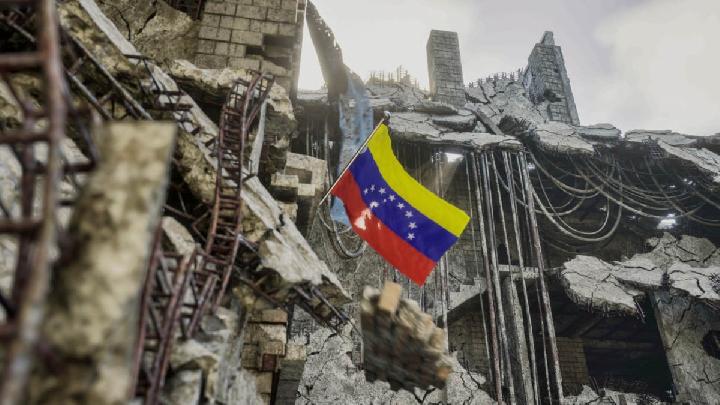
Changing a country's top leadership while keeping its political system intact is exactly how Trump's operation in Venezuela played out. US special forces removed Venezuelan leader Nicolas Maduro in early January and then struck a political deal with his deputy, Delcy Rodriguez.
Indeed, Trump told The New York Times, "What we did in Venezuela, I think, is the perfect, the perfect scenario [for Iran]."
Cornelius Adebahr of the German Council on Foreign Relations told German broadcaster ARD that Iran may install a new leadership built on the strength of Iran's Revolutionary Guards and seek to establish a new relationship with the US.
"It's the same scenario as in Venezuela," Adebahr said. "You swap out the top leadership and far fewer changes than people had hoped for."
It is not clear, however, if the US actually favors such a scenario. Trump, after all, also told The New York Times that Iranians could rise up to bring about a comprehensive political change.
What will become of Iran's leadership?
Peyman Asadzade of Harvard's Kennedy School believes the war could bring down Iran's regime.
Yet he thinks a different scenario is feasible, too. It would be defined by "continuity with recalibration" in that Iran's Assembly of Experts selects a pragmatic successor to Khamenei and then directs its attention to domestic priorities like "economic reconstruction, stabilization, and governance reforms, while foreign policy shifts toward de-escalation." This trajectory is not unlike the Venezuela scenario outlined above.
"A pragmatic course for whoever emerges in Tehran after this war would be to pursue de-escalation with the United States, in the hope that it could unlock economic relief and begin to ease the day-to-day cost pressures facing millions of Iranians," said Burcu Ozcelik, a Middle East expert with RUSI, a British security think tank.
"That, in turn, could open a path toward a more stable and much-needed period of recovery."
Asadzade can also envision a third scenario, whereby the Iranian regime rallies around an even harder-line leader and entrenches its conservative ideology.
This is a trajectory Julian Borger, a correspondent for The Guardian, fears. "After repeated attacks, the surviving leaders conclude that a bomb is the only guarantee of survival. The opposition is quashed with ever-growing brutality as the survivor regime becomes increasingly similar to North Korea: isolated, paranoid and nuclear-armed," he wrote in a recent analysis.
Could Iran's opposition come into power?
Two weeks before the start of the war, some 250,000 Iranians and other demonstrators took to the streets of Munich to cheer on Reza Pahlavi, whose late father, the Iranian Shah, was ousted following the 1979 Islamic Revolution. Pahlavi insisted he would not want to reinstate the monarchy but rather turn Iran into a democracy.
The Shah's son garnered a lot of attention during January's protests, even though he is not without controversy. This is likely because the Iranian regime has imprisoned and silenced many opposition figures.
Pahlavi has done "serious work on transition planning," acknowledged Mark Dubowitz and Ben Cohen of the US Foundation for Defense of Democracies (FDD). "But planning is not power. There is no certainty about who will govern Tehran the day the clerical regime collapses. Iran is also not a monolith; it is a mosaic, including Azeris, Kurds, Arabs, Baluch and others."
Will violence in Iran increase after the war?
The Iranian army hastened the Shah's downfall when it announced in February 1979 that it would not open fire on his opponents. After the Islamic Revolution later that year, Iran's new rulers established the Revolutionary Guards to safeguard their power. To this day, the army and the Revolutionary Guards coexist in Iran, although most analysts today attribute greater power to the latter.
The Revolutionary Guards not only maintain an army, air force, navy and secret service, but also run influential businesses. The EU, meanwhile, classified the Revolutionary Guards as a terrorist organization after they contributed to violently suppressing January's anti-government protests in Iran.
In the early stages of the war, Trump called on the Iranian army, Revolutionary Guard and police to lay down their weapons. Experts, however, say there are no signs that any of these organizations has been thrown into disarray.
However, Ozcelik, the RUSI expert, believes the Revolutionary Guards could face growing domestic resistance due to their elite patronage system.
"This could manifest in sharper institutional fault lines," he told DW. "One possibility is a widening divergence between the Revolutionary Guards and the conventional army, with the army increasingly elevated as the 'reformed' face of a renewed Iranian patriotism and functional state. Another is fragmentation within the Revolutionary Guards itself, as factions may compete over status and resources in a post-war settlement."
In this scenario, Iran's army and Revolutionary Guards could end up in different and perhaps even opposing political camps, which could spark civil war.
Iran's ethnic diversity could also endanger its domestic stability if separatist groups try to seize power amid a political vacuum. After all, five Kurdish organizations joined forces to collectively confront Iran's regime just one week before the war began. They reject Reza Pahlavi taking over on an interim basis.
This shows just how many challenges lie ahead should Iran's current regime collapse.
Read: Iran War: Why Is Russia Not Coming to Tehran's Aid?
Click here to get the latest news updates from Tempo on Google News