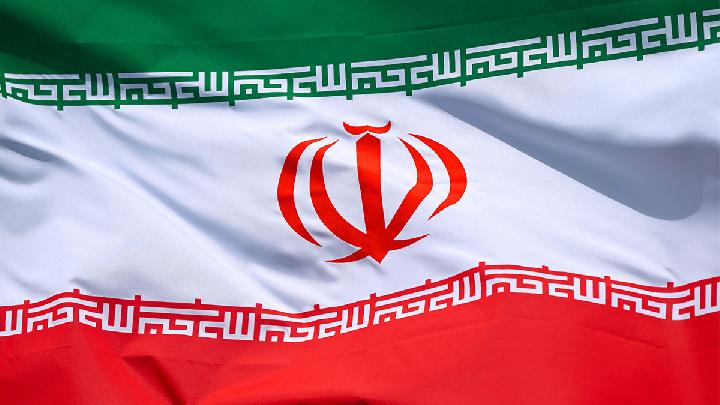
TEMPO.CO, Jakarta - On February 28, the United States launched "Operation Epic Fury" in Iran. In the week that followed, the US carried out thousands of strikes across the country, deploying more than 20 weapons systems across air, land, and sea.
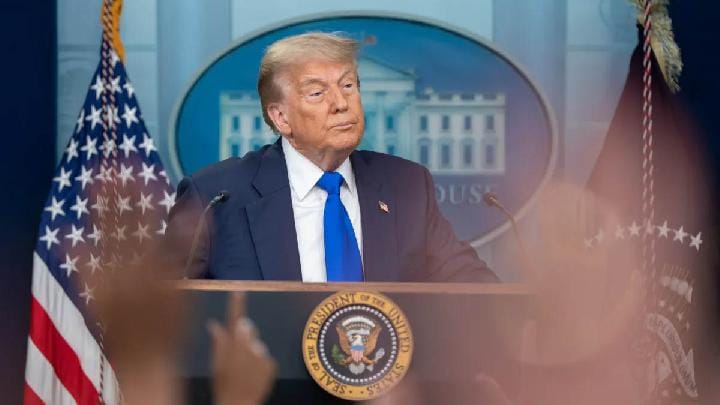
In the first wave of US-Israeli strikes, Iran's supreme leader Ali Khamenei was killed. US President Donald Trump has said the conflict could last four to five weeks, but that the US has the "capability to go far longer than that".
How confident is the Trump administration?
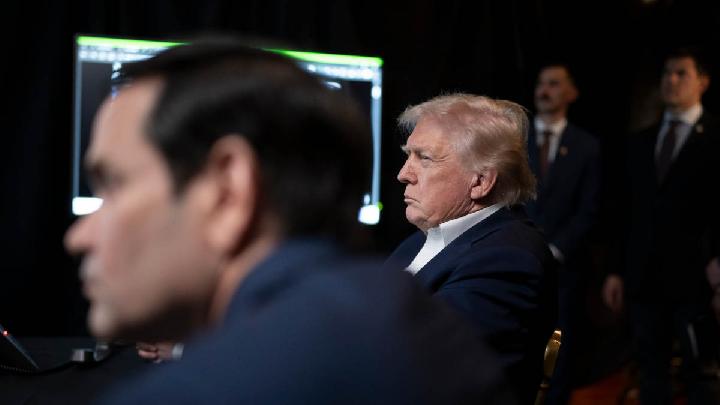
The Trump administration has been bullish about US military capacity.
"We've got no shortage of munitions," said Defense Secretary Pete Hegseth during a visit to US Central Command in Florida. "Our stockpiles of defensive and offensive weapons allow us to sustain this campaign as long as we need."
General Dan Caine, the Joint Chiefs of Staff Chair made similar assurances, "We have sufficient precision munitions for the task at hand, both on the offense and defense."
However, Trump has quietly acknowledged where issues could lie. In a post on his social media platform Truth Social, he wrote "The United States Munitions Stockpiles have, at the medium and upper medium grade, never been higher or better ... At the highest end, we have a good supply but are not where we want to be."
Kelly Grieco, senior fellow at the Stimson Center think tank agrees that Trump’s distinction on weapon grade matters. It’s these highest grade, long-range missiles and interceptors where there are the most concerns. “There are real some real limitations on stockpiles there,” she said.
The math of the conflict
Since the beginning of the conflict, the US, Israel, and Iran have unleashed a barrage of strikes across the region. According to the US Central Command (CENTCOM), the US hit more than 3,000 targets in Iran in the first 7 days.
In return, Iran has launched thousands of Shahed 136 drones, and hundreds of missiles at US targets across the region.
This is where the math gets uncomfortable.
Iran's Shahed drones cost between $20,000 and $50,000 to produce. There are various ways the US and allies have been defending against them, but none are cheap. Fighter jets armed with AIM-9 missiles are $450,000 a shot, plus the $40,000 per hour just to operate the plane. "The cost of operating the fighter for an hour is equivalent to the cost of a Shahed," says Grieco, "It's not efficient. It's not a favorable cost exchange."
She argues the US should have learned from Ukraine, which has found cheaper methods such as interceptor drones that cost less than the Shaheds. "The United States has tested [that technology], it just hasn't purchased it in sufficient numbers," said Grieco.
The far more expensive Patriot defense missiles (costing around $3 million per missile) are reserved for intercepting Iran's ballistic missiles, and it is here where there are concerns about stockpiles. Mark Cancian, senior advisor at the Center for Strategic and International Studies, estimates that stocks are being used up fast. "At the beginning, I think there were about 1,000 Patriots and I think we've chewed into that inventory quite a bit now". He estimates that 200-300 Patriot missiles have already been used.
High-grade weapons like this take time to build. Lockheed Martin delivered just 620 PAC-3 interceptors in all of 2025. "If you went to the company today and said I want to buy one more Patriot, it would take at least two years for that Patriot to show up," says Cancian
For shorter-range weapons such as bombs, JDAM kits, and Hellfire missiles the picture is different. "Militarily, I think we could sustain it for a very long time. You know, we have the ground munitions to do that," says Cancian.
The White House meets with defense companies
On 6th March, Trump met with several defense companies, posting afterwards on Truth Social that manufacturers had agreed to quadruple production of the highest-class weaponry. The White House stressed the meeting had been on the books for weeks.
Grieco, however, cast doubt on the novelty of the deals. "I found that to be like a non-announcement because in the last months most of these had already been announced."
Lockheed Martin’s agreement to scale up Patriot PAC-3 production from 600 to 2,000 per year has been public since January. After the White House meeting, no new timelines were given. The target date remains 2030.
Even accelerating production isn’t straightforward. "There are all these places of bottlenecks that even if you throw lots of money at this problem, it's not as simple as turn on the switch and produce. It's still going to take time," Grieco said.
The global consequences
Analysts agree that the US is not likely to run out of weapons while fighting in Iran, but there are concerns for the future.
"Will it run out? That's not quite the way I would phrase it." says Grieco. "I don't think anything's going to really going to run out in this war. But the problem is [...] we're going to be left with these bare stockpiles [...] and that's going to limit our choices in the years to come in terms of the Indo-pacific and Europe or even the Middle East."
Ukrainian President Volodymyr Zelenskyy has already raised the alarm.
"There are concerns that in the event of a prolonged war, America may reduce supplies of air defense systems and missiles for air defense to Ukraine," said Zelenskyy to RAI, the Italian national broadcaster.
In an interview with Bloomberg, former Secretary of State Antony Blinken sounded a similar warning. A sustained operation in Iran could leave the US vulnerable to threats from Russia and China, he said.
Is Iran being underestimated?
General Dan Caine has reported that Iranian ballistic missile launches are down "86% from the first day of fighting." Washington has taken this as a sign of progress.
For her part, Grieco acknowledges that it is hard to know the detail of behind the drop in Iranian launches but dubs it as probable that "we've done significant degradation of the ballistic missile force."
When it comes to Iran's Shahed drones, dispersed production makes stockpile estimates incredibly difficult. "Even before the war, we did not really have good estimates of how many they might have," Grieco said. "You could assemble one in your garage if you really wanted to."
More fundamentally she argues the US may have underestimated Iran. "If the goal is regime change... air power alone is not going to bring about the collapse of the regime."
She thinks that Iran’s previous restraint in responding to US and Israeli strikes was interpreted as weakness and argues it led to a series of deterrence failures. "They're fighting for the regime's survival. They have the incentives to fight hard and to pay a lot of costs."
Cancian agrees: "We’ve hit them quite hard and they have not sued for peace," he said. "That may have been unanticipated."
The swift capture of former leader Nicolas Maduro in Venezuela fuelled Washington's confidence about the likely outcomes of Operation Epic Fury. But the US has been wrong about the length and cost of its wars before. The Trump administration's stash of weapons may not run out in Iran, but questions remain about the supplies the US will have left when it's over.
Read: Around 140 US Troops Wounded in Iran War, Pentagon Says
Click here to get the latest news updates from Tempo on Google News