February 20, 2026 | 06:05 am

The government's approach to curbing budget deficits will have dire consequences in the future. A reflection of deteriorating fiscal governance.
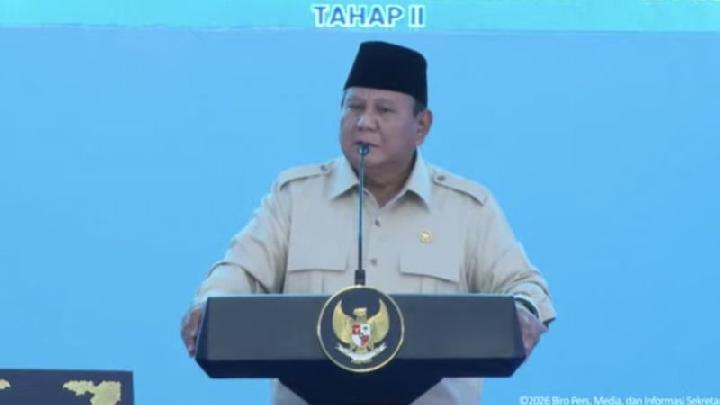
PRESIDENT Prabowo Subianto and his ministers are playing with fire. The array of acrobatic fiscal maneuvers they are performing in an attempt to curb budget deficits stemming from the President's favorite projects will eventually culminate in major problems.
Scrutiny from several international institutions should have prompted immediate improvements to the nation's disjointed fiscal management. One such warning came from Moody's Investors Service, with the ratings agency downgrading Indonesia's sovereign debt outlook from stable to negative.
Fortunately, Moody's is maintaining Indonesia's sovereign credit rating at Baa2, just one notch above investment grade. Nonetheless, their rating could change during the next assessment period if there is no improvement.
When establishing the outlook, Moody's addressed several issues. The primary concern is uncertainty over government policies, which indicates weak management. This assessment is based on the fact that the government continues to increase spending while revenue declines. Moody's also raised concerns over the formation of the Daya Anagata Nusantara (Danantara) Investment Management Agency, as it adds to the uncertainty surrounding financing and investment priorities.
Moody's is not the only rating agency scrutinizing the government's economic policies. Similar concerns have been expressed by others, such as Fitch Ratings and S&P Global Ratings, whose ratings serve as benchmarks for investors and global financial institutions.
Moody’s is not the only credit rating agency scrutinizing the government’s economic policies. Other institutions, such as Fitch Ratings and S&P Global Ratings, also provide the benchmarks used by global investors and financial institutions.
When a country's rating is poor or downgraded, investment risk goes up. In the context of sovereign debt, these ratings dictate investor appetite and the expected yields. In other words, a country with a poor rating will struggle to secure funding or to pay a premium when borrowing.
Instead of making improvements, Prabowo's economic team's tactics have grown increasingly disconcerting. In addressing the budget deficit, for instance, the government opted to circumvent regulations instead of cutting spending. This occurred when Finance Minister Purbaya Yudhi Sadewa issued a regulation allowing the government to withdraw Bank Indonesia's surplus funds before an audit.
Bank Indonesia's surplus is the amount of funds remaining after it fulfills its monetary obligations. Under the previous regulation, these funds could only be withdrawn after an audit was concluded. But now, these funds can be withdrawn at any time to patch up the budget. The government's practice of taking funds from the monetary authority reflects poor governance. Such actions are naturally unsettling to investors and will ultimately tarnish Indonesia's investment prospects.
There are also attempts to window-dress the deficit to keep it superficially below the 3 percent statutory limit. Tempo has obtained information that the government suppressed spending by withholding compensation and subsidy payments to public service providers, such as the state-owned oil company Pertamina, the state-owned power company PLN, and the state-owned railway company KAI, last year.
By stifling these budget posts, the government was able to keep the 2025 deficit just below three percent. By doing so, however, this year's subsidy and compensation payments will soar. If these funds are not paid, public services and the energy supply will be disrupted.
This reckless tinkering with fiscal policies is a ticking time bomb that could pose significant risks with catastrophic consequences. Prabowo should bear in mind that fiscal governance is akin to a nation's heart. When its rhythm is disrupted, the country could collapse.
Indonesia Pledges Better Fiscal Governance After Moody's Downgrade
9 hari lalu

Indonesian government said the commitment to achieve a budget deficit below 3 percent of GDP is non-negotiable.
Danantara Urged to Clarify Indonesia's Fiscal Policy to Moody's
12 hari lalu
Coordinating Economic Affairs Minister has urged Danantara to engage directly with Moody's to clarify Indonesia's fiscal policy direction.
The Balanced Budget Fiscal Illusion
13 hari lalu
The government is planning a balanced State Budget. This could trigger huge new debts.
Indonesia Faces Rp1,292.7 Trillion in Unspent Budget in Final Months of 2025
14 Oktober 2025
By the end of September 2025, the central government had spent Rp1,589.9 trillion, or 59.7 percent of the Rp2,663.4 trillion budget target.
Finance Ministry Says World Bank Fails to Grasp Indonesia's Fiscal Policy
9 Oktober 2025

Director-General Febrio Kacaribu adds that the World Bank's analysis has not fully taken into account the current government policies.
Indonesia's Economic Growth Projected to Hit 5.1% in 2025, Says BI Governor
22 September 2025

Bank Indonesia estimated Indonesia's economic growth for 2025 to range between 4.6 and 5.1 percent, supported by government economic package.
INDEF Warns Rp335 Trillion MBG Budget Could Strain Fiscal Capacity
4 September 2025

INDEF also assesses that the large budget for the MBG program has the potential to cut allocations for important sectors such as education and health.
Economist: Tensions in Pati Stem from Central Government Fiscal Policy
13 Agustus 2025

An economist from Andalas University, Syafruddin Karimi, accuses the central government's policy to cut the budget to local regions as the cause of tension in Pati
Sri Mulyani Highlights Food and Energy Security Crucial for National Sovereignty
13 Agustus 2025

According to Sri Mulyani, the State Budget (APBN) is a vital instrument in implementing food and energy security programs.
Indonesia Maintains Fiscal Stability Despite US-China Trade War, Government Says
23 April 2025

Amid the U.S.-China trade war, Indonesia has a budget deficit of 0.43 percent of GDP, reflecting prudent fiscal planning.