December 16, 2025 | 09:39 am

TEMPO.CO, Jakarta - The Constitutional Court under the leadership of Suhartoyo passes many progressive rulings. It needs to beware of the risk of intervention.
THE period of Suhartoyo’s leadership may be called the Constitutional Court’s redemption. The justices, guardians of the constitution, have issued normative, progressive rulings in various judicial reviews of laws. The rehabilitation of the institution that was severely damaged during the Anwar Usman period must be protected from the endeavors by politicians to co-opt it again.
The reputation of the Constitutional Court was tarnished when the justices were involved in political games in the run-up to the 2024 presidential election. Anwar Usman presided over the session that passed the ruling clearing the way for the nomination of Gibran Rakabuming Raka, his wife’s nephew and the son of President Joko Widodo, for the vice-presidency. The Constitutional Court’s Ethics Council found Anwar guilty of serious violations and dismissed him from the chairmanship.
Suhartoyo replaced Anwar Usman and has slowly improved the mechanisms and the power structure of the institution. So far, the justices have passed rulings to an ideal standard. Just look at the ruling that banned deputy ministers from becoming commissioners of state-owned companies, and also the ban on police officers occupying civilian posts. Similarly, they strengthened the role of the Civil Service Commission, and they confirmed the quota of 30 percent women representation in the House of Representatives.
These rulings from the Constitutional Court justices have given rise to hope for the Constitutional Court as the last bastion of laws that support justice and democracy. However, at the same time, the Court’s return to the constitutional path also faces a serious threat.
This threat comes from the possibility of political tugs of war like those seen in the judicial review of the Indonesian Military Law, which extends the power of the military into the civilian realm. The justices were divided when ruling on this. Five opposed, and four put forward a dissenting opinion.
Threats also come from those who do not abide Constitutional Court rulings. The National Police Chief refuses to implement the court ruling banning police officers from occupying civil positions. Unfortunately, there is as yet no effective legal instrument that can be used against those that defy court rulings.
Several nations have a concept of legislative emission to evaluate law enforcers who fail to fulfill their constitutional obligations. But its implementation in Indonesia does not automatically force them to comply.
The lack of a regulation covering contempt of court also weakens the position of the Constitutional Court. There is no mechanism for imposing sanctions on those who refuse to attend or withhold important documents during a formal review. As a result, requests for judicial reviews often fail not because of weak arguments, but because the court is unable to obtain evidence, which is in the hands of those who produced the laws.
The most serious threat comes from the authorities, which are easily able to collude to reduce the authority of the constitutional judges through the legislative route. The proposal to revise the Constitutional Court Law has the potential to undermine judicial independence. The institution could even disappear through an amendment to the Constitution.
In the words of legal expert Satjipto Rahardjo, the Constitutional Court justices have “tongues of flame.” Their every ruling is binding on 280 million Indonesians without there being any appeal mechanism. With such extensive power, the independence and integrity of the constitutional judges must be protected.
Narrow Interpretation of Journalist Protection
25 hari lalu
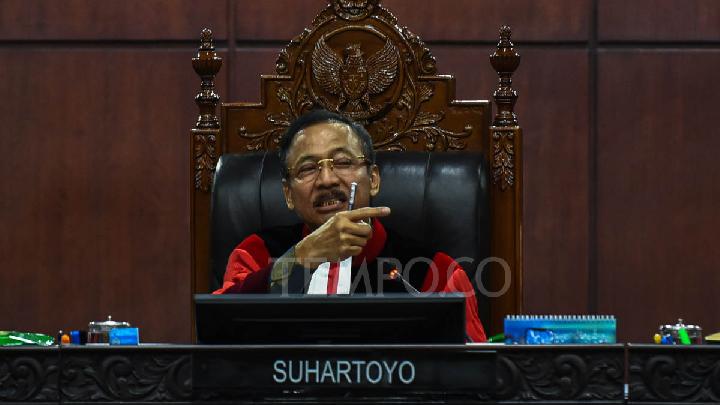
The Constitutional Court is hearing a challenge to Article 8 of the Press Law. The case risks narrowing legal protections for journalists.
Hotels Association Unruffled as Indonesia Caps 190-Year Land Right at IKN
29 hari lalu
The hotels currently being developed in IKN are not part of PHRI members' investments, the association chair said.
Active Police Officers Must Resign for Civil Posts, Gov't Announces
32 hari lalu
State Secretary Minister Prasetyo Hadi stated that the Constitutional Court's ruling on police is final and binding, and thus must be executed.
Indonesia's Court Rejects Petition to Elevate Police Chief to Ministerial Rank
32 hari lalu
The applicants argued that the National Police Chief should have ministerial status and serve a term aligned with the president and cabinet members.
Indonesia's Top Court Blocks Police Officers from Taking Civil Posts
32 hari lalu
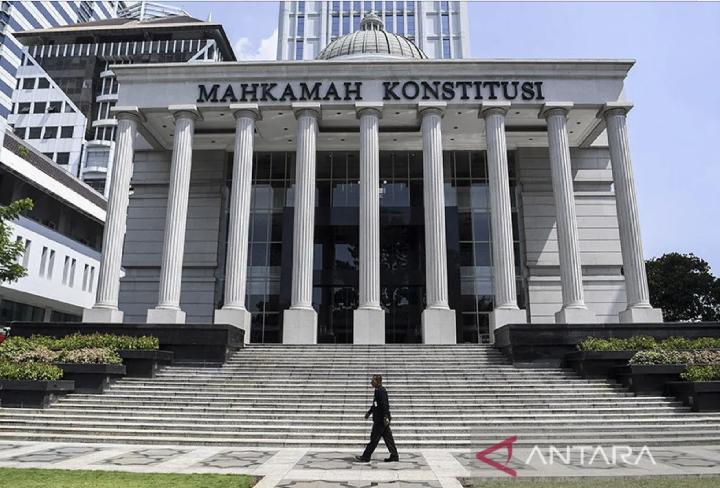
The Constitutional Court rules that police officers can no longer hold civil positions, requiring them to resign or retire first.
Small Parties Maneuvering Around Parliamentary Threshold
40 hari lalu

Small political parties are maneuvering to discuss the parliamentary threshold, even though the next general election is still four years away.
Indigenous Communities' Plantations Require No Business Permits, Indonesian Top Court Rules
17 Oktober 2025
The indigenous communities can conduct plantation activities without a permit as long as it's not commercialized.
Indonesian Gov't, House Urge Constitutional Court to Reject TNI Law Judicial Review
10 Oktober 2025
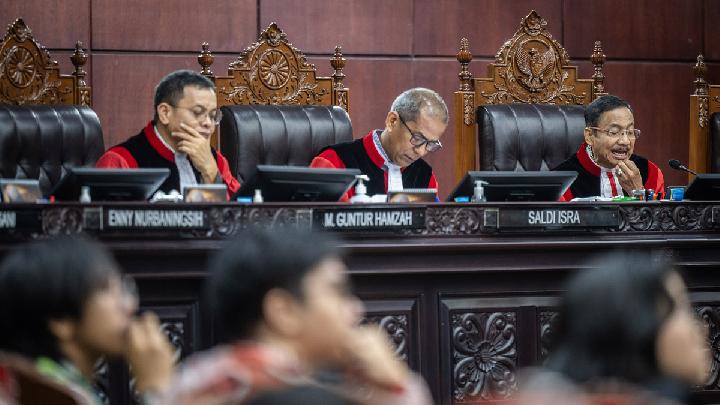
Indonesian parliament and the government have jointly urged the Constitutional Court to reject judicial review petitions challenging TNI Law.
Indonesia's DPR Faces Lawsuit Over Lifelong Pension Benefits
3 Oktober 2025

Two plaintiffs have sued at the court to remove DPR members from lifelong pensions, calling it unfair for taxpayers to fund 5-year service benefits.
Indonesian Govt Dismisses Concerns of Journalist Criminalization in PDP Law
23 September 2025

Ministry of Communication and Digital Directorate General notes concern on PDP Law.