September 3, 2026 | 04:00 pm

Oil and gas investment requires legal certainty. The Oil and Gas Bill’s clauses disregard accountability and integrity.
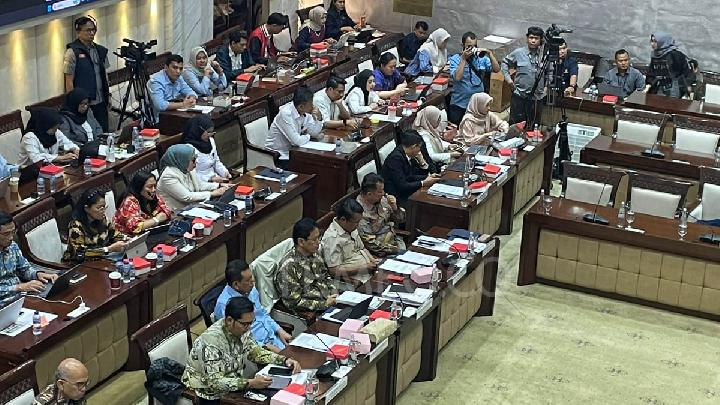
POLITICIANS always find opportunity in adversity. The latest example can be found in the revision of the Oil and Gas Law. Since 2015, the draft revision of Law No. 22/2001 has appeared only on the national legislation program. At a House of Representatives (DPR) plenary meeting on August 15, 2026, the bill was once again proposed for deliberation.
The revision of the Oil and Gas Law is mandated by a 2012 Constitutional Court ruling. The justices ruled that the existence of the Upstream Oil and Gas Business Activities Regulatory Agency (BP Migas) was contrary to Article 33 of the 1945 Constitution. BP Migas had weakened the state’s direct control over oil and gas management contracts.
According to the Constitutional Court justices, authority over managing these natural resources must return to the state through the relevant ministry. The government therefore established the Special Task Force for Upstream Oil and Gas Business Activities (SKK Migas) to replace BP Migas through Presidential Regulation No. 95/2012. Unlike BP Migas, which was an independent legal entity, SKK Migas operates under the Ministry of Energy and Mineral Resources.
SKK Migas’ legal standing is not strong enough to manage a constitutional mandate. Oil and gas management contracts have lost their legitimacy because their legal basis is not a law derived from the Constitution. SKK Migas’ authority is also vulnerable to being altered by the president according to his interests. In other words, SKK Migas lacks sufficient legitimacy as the implementing body of the Oil and Gas Law.
Without legal certainty, the oil and gas sector becomes less attractive to investors. Amid regional and global competition for natural resource investment, the lack of a strong legal framework puts Indonesia at a competitive disadvantage. Vietnam, for example, offers various incentives to oil and gas investors on a solid legal basis.
Amid sluggish oil and gas production, Indonesia needs investment in the sector. Oil production from January to July 2026 alone averaged just 600,000 barrels a day, far below the country’s daily oil demand of 1.7 million barrels. Besides boosting production, domestic oil and gas investment would increase tax revenues and, ultimately, economic growth.
Amid the need for an Oil and Gas Law, the bill contains clauses that could deter investors because they disregard crucial concerns for major investments: accountability and integrity. One such provision concerns the establishment of a Special Oil and Gas Business Entity (BUK). BUK Migas would be an institution similar to SKK Migas.
Its authority would extend from upstream to downstream operations: determining working areas, appointing contractors, and handling crude oil exports and imports. These powers are currently spread across the Ministry of Energy, SKK Migas, and the Downstream Oil and Gas Regulatory Agency. The problem is that, like Danantara, BUK Migas would be directly controlled by the president.
This centralization of authority would give the president extraordinary power to control oil and gas management from upstream to downstream. There is also another clause concerning a petroleum fund financed by contractor contributions and state revenues from oil and gas. Like Danantara’s assets, the fund would be separated from the State Budget.
Placing BUK and the petroleum fund under the president’s control is reminiscent of Pertamina during the New Order. At the time, Pertamina became a cash cow for those in power and a hotbed of corruption. With such poor governance, the prospect of restoring the oil and gas bonanza of the 1970s through the Oil and Gas Law will narrow because the regulation disregards transparency.
Digging for a Petroleum Fund
6 jam lalu

A plan to establish a petroleum fund is included in the draft revision of the Oil and Gas Law. It could become an additional burden on investors
Momentum for Reforming Oil and Gas Production-Sharing Contracts
11 Juni 2026

The government must optimize new blocks to boost oil and gas lifting. The incentive packages and production-sharing schemes are not attractive enough.
Indonesia's Purbaya Projects 5.4% Economic Growth in 2026
6 Juni 2026

As of the first quarter of 2026, economic growth was recorded at 5.61%, higher than last year's growth of 5.11% year-on-year.
Why Indonesian Oil and Gas Imports See 82.52% Hike in April 2026
2 Juni 2026

The import of oil and gas in April 2026 has surged by 82.52 percent compared to April last year. The total value of oil and gas imports in April was recorded at US$4.59 billion.
Russian Firm to Resume Indonesia's Tuna Block Project in June
15 Mei 2026

The Tuna Block project was delayed after Harbour Energy, through its subsidiary Premier Oil, withdrew from the project.
Pertamina Hulu Indonesia Exceeds Oil and Gas Output Targets in Q1
27 April 2026
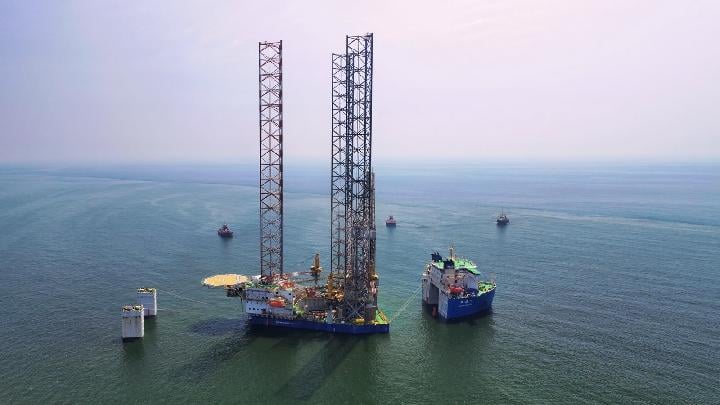
Indonesia's state-owned oil company Pertamina recorded an oil and gas production performance above target throughout the first quarter of 2026.
Indonesia Announces Major Oil and Gas Discovery in Ganal Block
20 April 2026
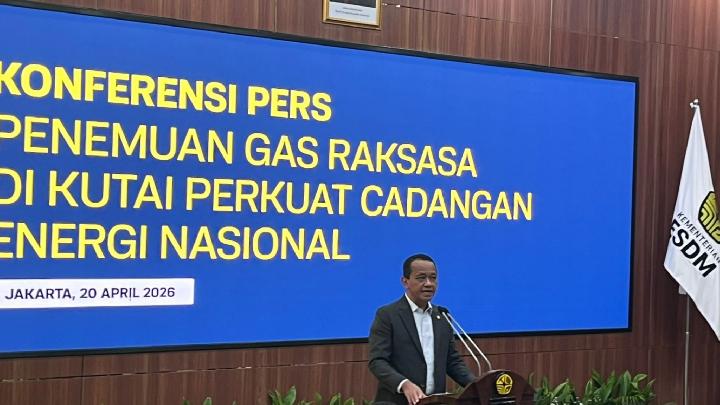
The Ministry of Energy and Mineral Resources (ESDM) estimates the potential of the gas reserves to reach around 5 trillion cubic feet (Tcf) and 300 million barrels of condensate.
Bahlil: Indonesia's LPG Supply Remains Secure Despite Price Hike
20 April 2026

Minister Bahlil also confirmed that there will be no price increase for 3-kilogram subsidized LPG.
Pertamina Hikes Non-Subsidized Fuel Prices Starting April 18
18 April 2026

The updated fuel prices can be accessed through the MyPertamina application.
Indonesia Has Enough Funds to Withstand US$100 Oil, Says Purbaya
6 April 2026
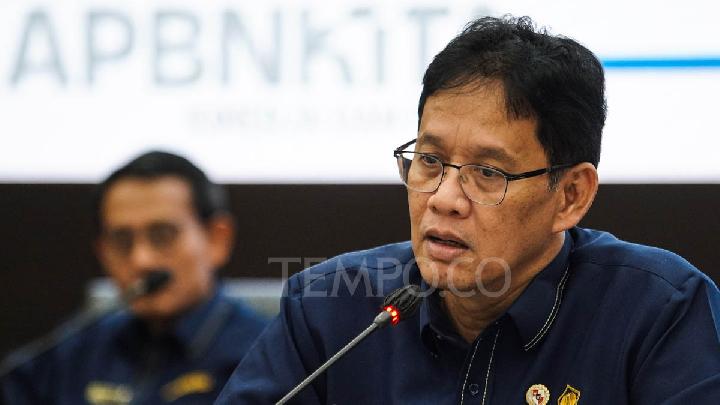
Finance Minister Purbaya Yudhi Sadewa said Indonesia will keep subsidized fuel prices unchanged until end-2026 despite rising oil prices.