TEMPO.CO, Jakarta - The Director of Public Policy at the Center of Economic and Law Studies (Celios), Wahyudi Askar, has urged the Russell Group, an association of 24 leading research universities in the United Kingdom, to carefully consider the potential risks of collaborating with the Indonesian government on the construction of 10 Republic of Indonesia Universities (URI).
Wahyudi sent a letter to the Russell Group after the association contacted him several months ago to discuss the feasibility of the Indonesian government's plan.
The Russell Group said it had been approached to provide teaching support for the planned universities, which are expected to be built within two years.
Criticism Over Education Policy Priorities
Wahyudi argued that establishing 10 new universities is not the most urgent priority for Indonesia's higher education sector.
"We fully support strengthening academic cooperation between Indonesia and Britain. However, we believe this specific initiative is based on an inappropriate policy priority," Wahyudi said in his letter.
He also highlighted ongoing concerns over the welfare of educators in Indonesia, including a pending judicial review related to lecturer welfare issues.
Wahyudi, who earned his master's and doctoral degrees from the University of Manchester, a Russell Group member, said his academic experience in the UK shaped his understanding of the importance of research quality, academic standards, and institutional integrity.
Indonesia Already Has Thousands of Higher Education Institutions
According to Wahyudi, Indonesia's main higher education challenge is not the lack of universities but insufficient investment in academic quality.
Indonesia currently has 4,303 higher education institutions serving a population of around 285 million people, or roughly one institution per 66,000 people.
He said the ratio is higher compared with countries such as Japan, which has one university per 153,000 people, Australia with one per 159,000 people, and the UK with one per 418,000 people.
"Many universities in Indonesia are currently operating below capacity and struggling to attract students," he said.
Wahyudi argued that government resources would be better allocated toward improving existing universities through increased investment in lecturers, laboratories, research funding, scholarships, and institutional development.
He warned that the construction of 10 new universities could divert trillions of rupiah from more pressing needs.
Concerns Over Lecturer Welfare and Budget Pressure
Wahyudi acknowledged that Indonesia needs more doctors and improvements in medical education. However, he said expanding existing medical faculties would be more effective than creating new universities.
"Collaboration with British universities can already be done through existing institutions in Indonesia," he said.
He also raised concerns about lecturer welfare, citing unpaid professional allowances for civil servant lecturers estimated at around Rp5.7 trillion.
"Media also recently reported that more than half of lecturers in Indonesia finance their own research using personal funds," he said.
Under these circumstances, Wahyudi warned that establishing new universities could intensify existing problems in the higher education sector.
Beyond educator welfare, he also questioned whether the project is financially feasible amid Indonesia's current budget constraints.
"Many academics and policy experts question whether this is an appropriate use of public resources," he said.
Calls for Independent Assessment
Wahyudi urged the Russell Group to seek independent perspectives before committing to the project.
He suggested that the association consult Indonesian researchers, university leaders, academic organizations, and Indonesian scholars based in the UK to gain a broader understanding of the country's higher education needs.
"Their insights will provide a more balanced understanding of Indonesia's higher education needs beyond the government's official presentation," he said.
Wahyudi said the collaboration could risk worsening educator welfare issues, increasing tensions within the higher education sector, and potentially affecting the Russell Group's reputation.
He told Tempo that he is still waiting for a response from the Russell Group. Tempo has contacted the association through its official email but has not received a response. State Secretary Minister Prasetyo Hadi has also not responded to requests for confirmation.
Prabowo Launches Republic of Indonesia University
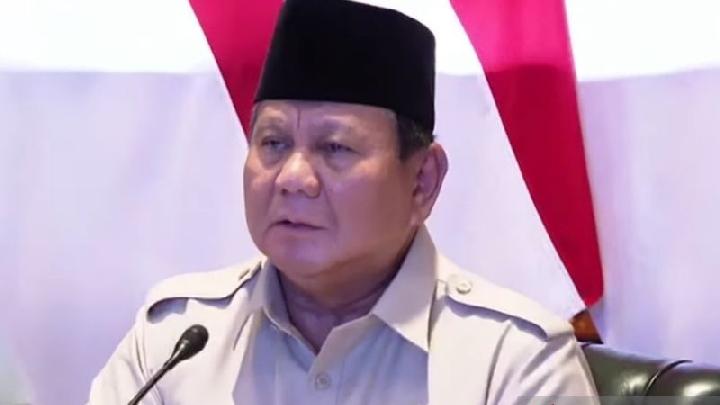
The planned Republic of Indonesia University was previously introduced by President Prabowo Subianto, who on Wednesday, July 22, 2026, inaugurated Deputy Defense Minister Donny Ermawan Taufanto as the university's governor.
At the same event held at the State Palace in Jakarta, Yos Sunitiyoso, a business professor at the Bandung Institute of Technology (ITB), was appointed vice governor.
Donny said the Republic of Indonesia University is a new higher education institution designed to train future government officials and leaders of state-owned enterprises.
"The President is very concerned about human resources, especially for future Indonesian leaders," Donny said.
The university plans to establish 10 campuses, with graduates receiving academic degrees equivalent to those awarded by other higher education institutions.
Click here to get the latest news updates from Tempo on Google News