December 15, 2025 | 02:41 pm
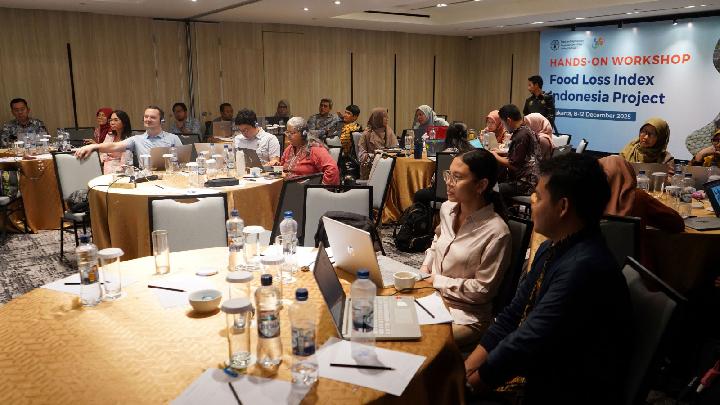
TEMPO.CO, Jakarta - Statistics Indonesia (BPS) and the Food and Agriculture Organization (FAO) of the United Nations concluded a four-day workshop in Jakarta on December 12, 2025, to enhance the country’s capacity to monitor and reduce food loss using the global Food Loss Index (FLI) methodology.
Globally, FAO estimates that 30 percent of all food produced is lost and wasted. Approximately 13 percent of this occurs from harvest up to, but excluding, the retail level, with another 17 percent wasted from the retail level onward. These substantial figures underscore the importance of Sustainable Development Goal (SDG) Target 12.3, which aims to reduce food loss and halve food waste by 2030.
Measuring food loss accurately is essential for pinpointing where and for which commodities losses occur, thereby ensuring that interventions deliver maximum impact.
The FLI begins by measuring food loss percentages across the supply chain. It focuses on at least two main commodities within five key categories: animal products; cereals and pulses; fish and fish products; fruits and vegetables; and roots, tubers, and oil-bearing crops. This compiled data is then used to construct the FLI, which tracks changes in food losses over time and measures progress toward the SDG targets.
The workshop, held from December 9 to 12, 2025, focused on building the Indonesian government’s technical capacity to collect, compile, and report food loss data and conduct detailed value chain analysis, aligning with the FAO’s global standard. It also fostered experience sharing with officials from Malaysia and India, two other countries working on the index, and concluded with strategic discussions on mitigating food loss and waste (FLW) in Indonesia.
"Acquiring comprehensive data on where, when, and why food losses occur is key to driving the necessary interventions in achieving Indonesia’s target of reducing three-quarters of its food loss and waste by 2045,” said M. Habibullah, BPS Deputy for Production Statistics.
Sangita Dubey, FAO Regional Statistician for Asia and the Pacific, added, “Using these data to inform policies to reduce food loss and waste is essential to improving food security.”
The Economic Impact of FLW in Indonesia
Indonesia currently produces an estimated 184 kg of FLW per capita annually, resulting in economic losses of up to Rp551 trillion per year, or about 5% of its GDP, according to estimates by the Ministry of National Development Planning (Bappenas). Better management of this loss could potentially feed one-third of Indonesia’s population.
This recent workshop follows a series of FAO-facilitated trainings initiated in 2024. During these sessions, officials from BPS, the Ministry of Agriculture, and other relevant ministries learned how to select key commodities, identify critical loss points across value chains, and collect data at farm and wholesale market levels.
During the workshop, BPS presented its latest FLI results, collected from existing surveys on eight of Indonesia’s high-value commodities, including rice, maize, red chili, shallot, beef, chicken meat, eggs, and mackerel, to gather stakeholder feedback as the first step toward data validation and official reporting.
Global Commitment and FAO Support
"Indonesia has demonstrated significant commitment and progress in calculating its FLI, thereby contributing to global efforts to reduce food loss," said Rajendra Aryal, FAO Representative in Indonesia and Timor-Leste. "Producing and consuming responsibly is a critical step in transitioning to sustainable agrifood systems, given the grave impact food loss and waste have on our environment."
Globally, annual food loss amounts to over 400 billion USD and accounts for 8 to 10 percent of the world’s greenhouse gas emissions.
"As the custodian agency for SDG indicator 12.3.1.a, FAO stands ready to provide technical assistance for countries like Indonesia. The FLI will be a valuable asset to support national-level monitoring of agrifood system performance and inform policies in reducing and mitigating food loss, further benefiting smallholders, the environment, and the overall agrifood systems," Rajendra concluded.
Read: 2025 Set for Second-Hottest Year on Record
Click here to get the latest news updates from Tempo on Google News
BPS Logs 0.17% Inflation in November 2025
13 hari lalu

The dominant commodity driving inflation in the expenditure group was gold jewelry, contributing to an inflation rate of 0.08 percent.
Today's Top 3 News: Indonesia Sees Rise in Creative Economy Workers, Reaching 27.4mn in 2025
26 hari lalu

Here is the list of the top 3 news on Tempo English today.
Indonesia Sees Rise in Creative Economy Workers, BPS: Reaching 27.4mn in 2025
27 hari lalu

BPS records the number of creative economy workers reaching 27.4 million in 2025, up from 26.48 million in 2024.
Indonesia's BPS: Global Geopolitical Risks Fueling Surge in Gold Prices
27 hari lalu

PT Antam data shows gold sales from January to September 2025 reached 34,164 kilograms, or 1,098,398 troy ounces.
Indonesia's Free Nutritious Meals Program Linked to Surge in Egg Prices, Says BPS
27 hari lalu
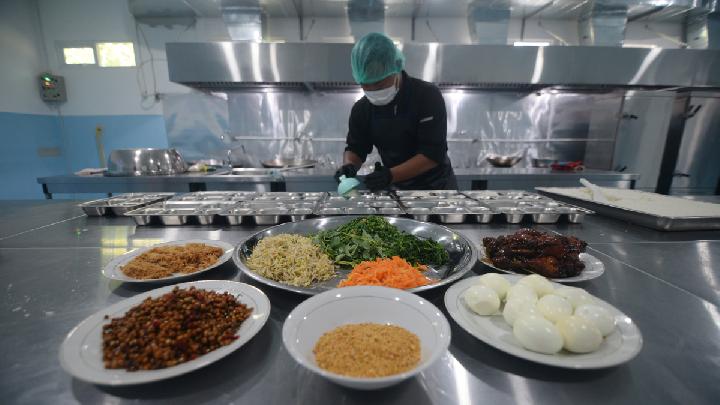
The Central Statistics Agency (BPS) highlighted the surge in demand from the Free Nutritious Meal program as a key driver.
Indonesia's Workforce Still Dominated by Elementary School Graduates, BPS Reports
39 hari lalu

As in previous years, BPS data shows that Indonesian workers are still dominated by elementary school graduates.
Indonesia's Economy Grows 5.04 Percent in the Third Quarter of 2025
39 hari lalu

Statistics Indonesia (BPS) states that economic growth is supported by domestic economic activities and foreign demand.
Indonesia's Jobless Remains High at 7.46 Million Despite Rate Drop to 4.85%
39 hari lalu

The Central Statistics Agency (BPS) recorded Indonesia's total number of unemployed individuals in August 2025 at 7.46 million people.
Major Indonesian Airports See Drop in Passengers in September 2025
41 hari lalu
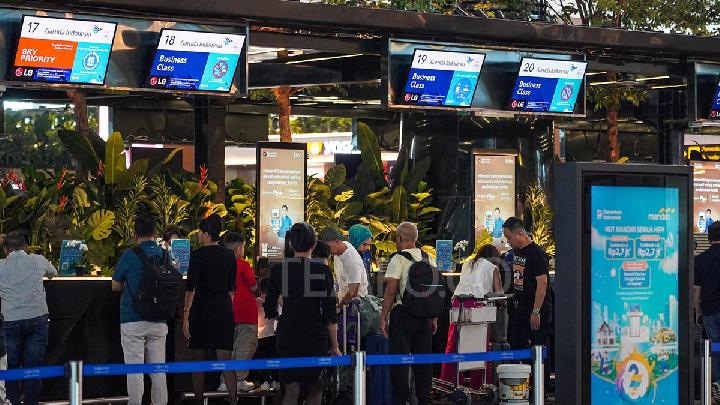
The Central Statistics Agency (BPS) records the greatest decrease in the number of passengers at I Gusti Ngurah Rai Airport, which fell by 15.07 percent monthly.
Indonesia Sees 7.33% Decline in Foreign Tourist Arrivals in September 2025
41 hari lalu

From January to September 2025, Statistics Indonesia (BPS) recorded 11.43 million visits by foreign tourists vacationing in Indonesia.