December 12, 2025 | 07:10 am

TEMPO.CO, Jakarta - Prabowo’s intervention in the rehabilitation of defendants in the ASDP corruption case weakens both anti-corruption efforts and the rule of law.
PRESIDENT Prabowo Subianto has once again intervened in the law enforcement process of a corruption case. This time, he did so by rehabilitating three defendants in the corruption case involving Angkutan Sungai, Danau, dan Penyeberangan Indonesia Ferry, or ASDP. They are the company’s former Chief Executive Officer, Ira Puspadewi, and two other officials, Muhammad Yusuf Hadi and Harry Muhammad Adhi Caksono.
They were charged with involvement in a case concerning the acquisition of Jembatan Nusantara by ASDP, which resulted in a state loss of Rp1.2 trillion. The Jakarta Corruption Court found them guilty, sentencing Ira to four and a half years in prison and a fine of Rp500 million. With the rehabilitation granted, the sentence against the three defendants cannot be executed, and all their rights are restored.
The decision to grant this rehabilitation is questionable. Rehabilitation is indeed mentioned in Article 14(1) of the 1945 Constitution as a presidential prerogative right. However, the practice and doctrine of Indonesian criminal law for decades have defined rehabilitation more strictly than merely the “restoration of rights.”
The Criminal Procedure Code (KUHAP) defines rehabilitation as the right of a person acquitted or released by the court due to a legal or factual error, or because the legal process was conducted without a valid basis. Rehabilitation is an instrument of judicial remedy—a restoration for the state’s error against a citizen—not a political instrument to cancel a criminal case already decided by the court.
In the ASDP case, there were no mistakes made against the defendants, in the legal provisions applied, or even in procedures that could invalidate the investigation or prosecution. In fact, the opposite was true: the court had already found Ira and the two ASDP officials guilty due to the evidence presented during the trial.
The use of a “presidential rehabilitation” for an individual already found guilty contradicts the definition of rehabilitation in the Criminal Procedure Code. If a person wants their name to be cleared, there is only one requirement: they must be declared not guilty in court.
Moreover, the legal process in this case is not yet complete. The defendants could still file appeals and judicial reviews with the Supreme Court. When the verdict has not yet been final and binding, granting rehabilitation defies the logic of the criminal justice system. How can a person whose legal efforts are unfinished be immediately rehabilitated as if they were never guilty?
This is the third time President Prabowo has intervened in the enforcement of a corruption case. Previously, he granted abolition to former Trade Minister Thomas Trikasih Lembong, and an amnesty to Indonesian Democratic Party of Struggle (PDI-P) Secretary-General Hasto Kristiyanto. An abolition results in the removal of all charges and legal consequences against a person previously convicted, while an amnesty removes the legal consequences without clearing the criminal record.
As the legal process against Ira and her colleagues has not yet been final and binding (inkrah), why were they granted rehabilitation—an instrument that is legally intended for people found not guilty. Why, for instance, was the abolition option not chosen, as constitutionally this is aimed at halting a prosecution?
In the long run, Prabowo’s repeated intervention in law enforcement is not merely a political settlement of a political matter. It will complicate anti-corruption efforts and weaken the supremacy of law. When a judge’s verdict is overturned through a political decision, the message to the public and law enforcement is very clear: corruption is no longer a legal problem, but an issue of power.
Waskita Karya to Rehabilitate Rp282.6 Billion in Irrigation Networks Across Indonesia
3 hari lalu

Waskita Karya has just announced a project to improve and rehabilitate irrigation networks in several regions in Indonesia.
Prabowo Grants Rehabilitation for Three ASDP Corruption Convicts
16 hari lalu
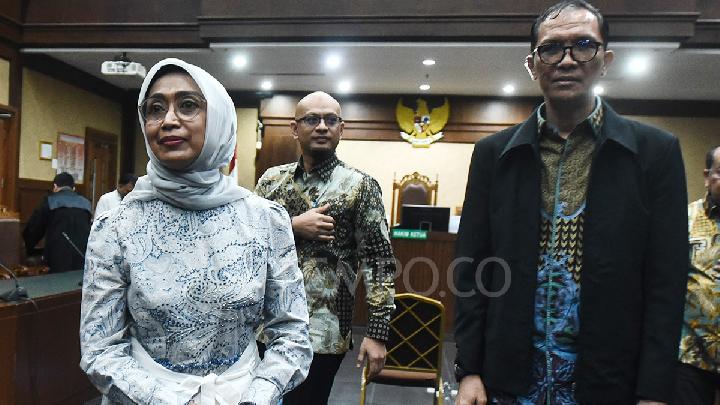
The Corruption Court of the Central Jakarta District Court previously sentenced Ira Puspadewi to 4.5 years in prison.
Prabowo Uses His Rehabilitation Rights to Restore the Reputation of Two North Luwu Teachers
28 hari lalu
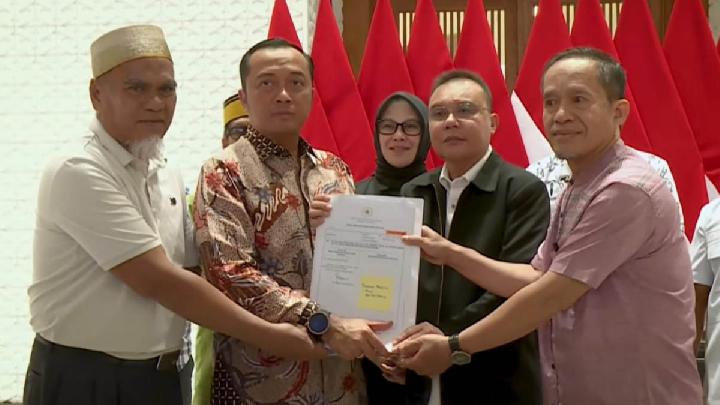
With the rehabilitation, Prabowo restores the good name, dignity, and rights of the two teachers who have long been affected by legal issues.
How India Can Compensate for Wrongful Imprisonment
1 September 2025

A comprehensive compensation scheme must also address rehabilitation, counselling and reintegration into the society of India.
Dedi Mulyadi's Youth Military Barracks Not Solving Key Issues, Says Children Protection Center
7 Mei 2025

The Children Protection Center rejects Governor Dedi Mulyadi's policy of sending troubled children to military barracks for rehabilitation.
BNN Chief: Drug Addicts Who Voluntarily Report Will Not Face Legal Action
5 Maret 2025

Head of BNN Komjen Marthinus Hukom stated that drug addicts will receive rehabilitation to be free from the grip of narcotics.