TEMPO.CO, Jakarta - The Central Statistics Agency (BPS) has reported that the Special Region of Yogyakarta (DIY) achieved the highest economic growth on Java Island by the end of 2025. Based on fourth-quarter data for 2025, the region’s economy grew by 5.94 percent year-on-year, surpassing the achievements of other provinces across Java both annually and cumulatively.
The Acting Head of BPS DIY, Endang Tri Wahyuningsih, stated that this growth was driven by several sectors. The Other Services sector grew by 9.70 percent, followed by Health Services at 9.62 percent, and Construction at 0.90 percent.
"From the expenditure side, the vitality of investments reflected in Gross Fixed Capital Formation grew by 9.36 percent, becoming the main focus of economic growth in Yogyakarta," Endang said on Friday, February 6, 2026.
Additionally, the Household Consumption Expenditure (PKRT) sector grew by 4.89 percent, while exports and imports experienced contractions of 3.76 percent and 4.23 percent, respectively.
Despite Yogyakarta recording the highest economic growth, the contribution of its Gross Regional Domestic Product (GRDP) to the broader Java Island economy remains relatively small at just 1.55 percent.
On the other hand, BPS mentioned that the poverty rate in Yogyakarta for the September 2025 period showed improvement. The number of poor people was recorded at 422,790, a decrease of 3,030 compared to March 2025. "Percentage-wise, the poverty rate decreased to 10.08 percent, representing a 0.15 percent decline over the last six months," she said.
The poverty measurement was conducted using the basic needs approach, comparing the average expenditure of the population with the Poverty Line (GK) covering food and non-food requirements.
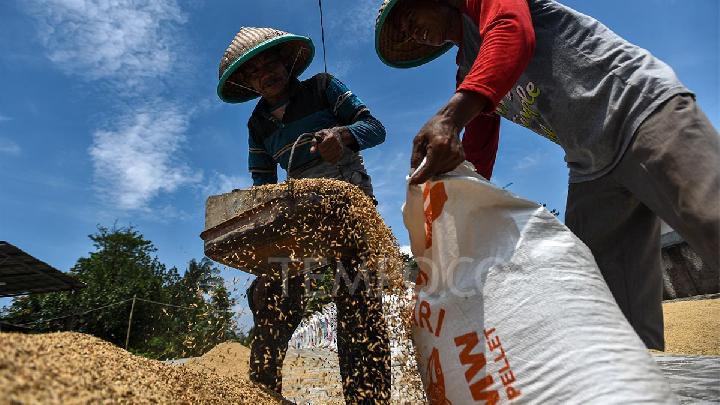
In September 2025, the poverty line was recorded at Rp649,331 per capita per month, a 3.67 percent increase compared to March 2025. Approximately 72.85 percent of the poverty line components stem from food needs, meaning the movement of food prices greatly affects the poverty rate.
When measured at the household level, with an average of 4.28 members per poor household, the poverty line is equal to Rp2.78 million per household per month. "The main commodities contributing to the poverty line are still dominated by rice, followed by housing, energy, and other basic necessities," said Endang.
Based on region, urban poverty was recorded at 9.99 percent, while rural poverty stood at 10.37 percent. In the period between March and September 2025, both areas saw a decline, with a more significant decrease occurring in urban centers. The gap between urban and rural poverty rates is also narrowing.
However, behind this economic growth, Endang noted that indicators for poverty depth and severity actually increased. The Poverty Depth Index (P1) and the Poverty Severity Index (P2) rose compared to March 2025. This indicates that the average expenditure of the poor remains relatively far from the poverty line and that the disparity in expenditure among the poor is widening.
"Nevertheless, overall, the poverty condition in Yogyakarta shows a decreasing trend in the number and percentage of poor people," she added.
According to her, efforts to alleviate poverty should continue to focus on increasing purchasing power, stabilizing the prices of basic needs, and strengthening social protection programs to ensure the benefits of economic growth are distributed more evenly.
As for expenditure inequality, the situation in September 2025 showed improvement. Inequality measured via the Gini Ratio was recorded at 0.414, a decrease from 0.426 in March 2025 and 0.428 in September 2024. This decrease, according to Endang, indicates a more equitable distribution of public expenditure.
Inequality measurement was conducted using two main indicators: the Gini Ratio derived from the Lorenz curve, and the distribution of expenditure according to the World Bank approach. The Gini value ranges from 0 to 1, where a higher value signifies greater inequality.
By region of residence, inequality in urban areas in September 2025 was recorded at 0.419, down from 0.434 in March 2025. Meanwhile, rural areas recorded a Gini Ratio of 0.337, slightly higher than in March 2025 (0.334) but lower than in September 2024 (0.355). In general, inequality in urban areas remains higher than in rural regions.
Read: BPS: Indonesia's Gini Ratio Drops, Urban Inequality Stays High
Click here to get the latest news updates from Tempo on Google News