
The House of Representatives and the government suddenly take an interest in the Indigenous Peoples Bill. Meanwhile, land grabs continue unabated.
THE Indigenous Peoples Bill has returned to the national legislative priority list after being in limbo for 16 years. The House of Representatives (DPR) suddenly began to take the matter seriously. The government is also optimistic that the bill can be finalized this year. It may initially seem like good news. However, many suspicious contradictions lie behind this acceleration.
The promise to protect indigenous communities has been limited from the outset. The government emphasized that the law must be aligned with existing regulations in the agrarian, forestry, and agricultural sectors. Yet, these are the sectors where the roots of conflict have long been entrenched. If the new regulations must comply with problematic old ones, their corrective function is lost before it even has a chance to take effect.
The circulating House version of the draft law also shifts the position of indigenous peoples from rights holders to objects of state regulations. Recognition that should strengthen the position of indigenous communities could turn out to be an instrument of state control instead.
This contradiction is more apparent on the ground. While the bill was being deliberated with promises of protection, the state was actually accelerating the annexation of customary territories. The case in Boven Digoel, South Papua, is a stark example. The Wambon tribe had gone through a long process to secure recognition of their customary forest. The local government had granted recognition, mapping of the area was conducted, and factual verification was carried out. However, the entire process was abruptly undone by an administrative decision of the central government: the release of the forest area, followed by the granting of land use rights to corporations.
Here, a glaring disparity takes hold. The process of recognizing customary forests takes years and involves various stages. In contrast, decisions to revoke such recognition are made in a matter of weeks. It is as if the central government has two faces: it moves very slowly when asked to recognize customary forests, yet acts with remarkable speed when it comes to seizing them.
Constitutional Court Decision No. 35/2012 affirmed that customary forests are no longer state forests. However, more than a decade later, millions of hectares of customary lands still overlap with government claims. If even constitutional rulings are ignored, it is difficult to expect new laws to be implemented with any different intention.
The situation is further complicated by the expansion of national strategic projects. Under the guise of food and energy security, large-scale land clearing continues unabated. The process involves minimal public participation, often triggers conflicts, and is even marked by the criminalization of residents. Rather than being instruments of prosperity, these projects have instead become a source of additional tension in customary territories.
With all these contradictions, the accelerated deliberation of the Indigenous Peoples Bill may not necessarily be a breath of fresh air. It could correct long-standing inequalities, but it could also provide new legitimacy to practices that have long been contested. Without fundamental changes in policy perspectives and practices, the new law may simply add another layer of regulations rather than resolve the underlying issues.
What is needed now is a commitment from the government and the House to recognize indigenous peoples as full rights holders, not merely as subjects of regulation. Without this, the passage of the Indigenous Peoples Bill will only underscore the irony: promised protection, but deprivation continues.
Oil Palm Plantations on Customary Forest Land
16 jam lalu
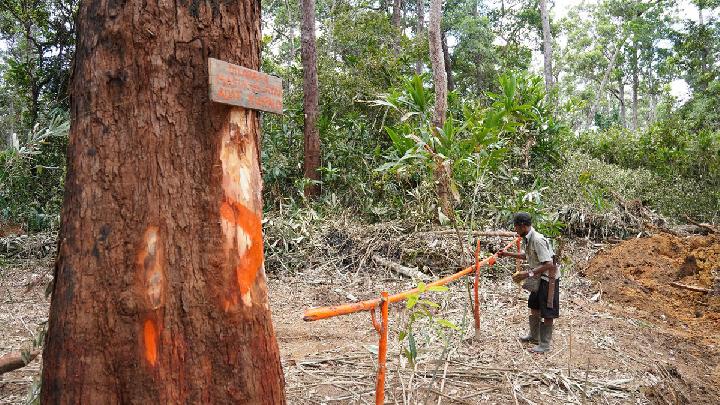
The government issues plantation concessions on land proposed as customary forest in Boven Digoel.
'Foreign Influence' Behind Customary Area Recognition
27 hari lalu
The government's push to recognize customary forests is not backed by funding. The Forestry Ministry relies on foreign philanthropic institutions.
Customary Forest Task Force: Acceleration in Slow Motion
27 hari lalu
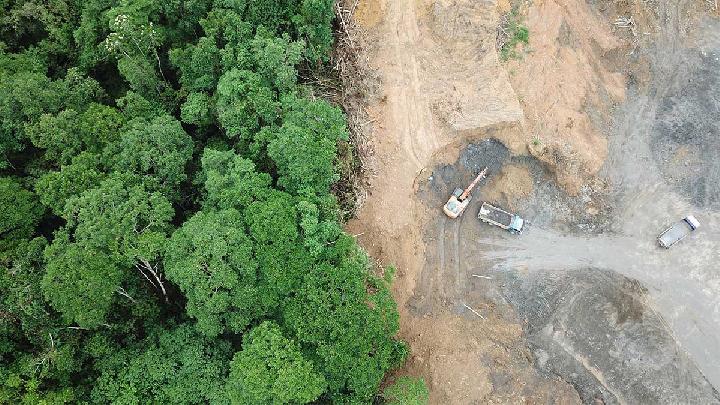
The government has extended the mandate of the Customary Forest Task Force until 2029. It is not an answer to the root problem.
Prabowo's Plan for Palm Oil Self-Sufficiency
26 Januari 2026
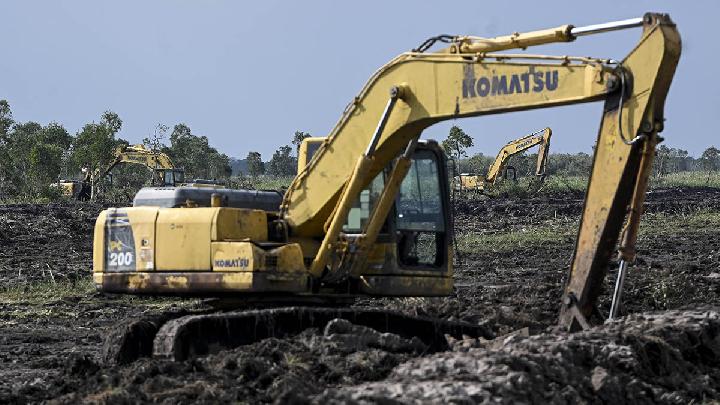
The government is expanding the National Strategic Project for food self-sufficiency in South Papua to make way for oil palm plantations.
How Young Indigenous People Safeguard Customary Forests
15 Oktober 2025

A youth movement of the Knasaimos indigenous community in South Sorong, Southwest Papua, defends their ancestral forests.
Stop the 'Empty Land' Politics in Papua
15 Oktober 2025
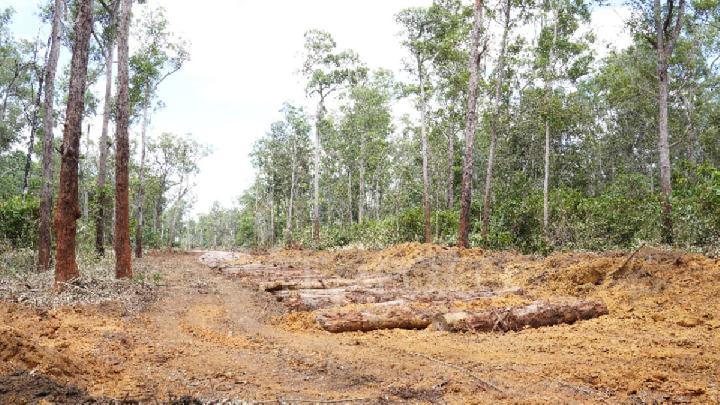
The government's claim of 'empty land' in Papua reveals a colonial mindset, one that erases indigenous communities existence.