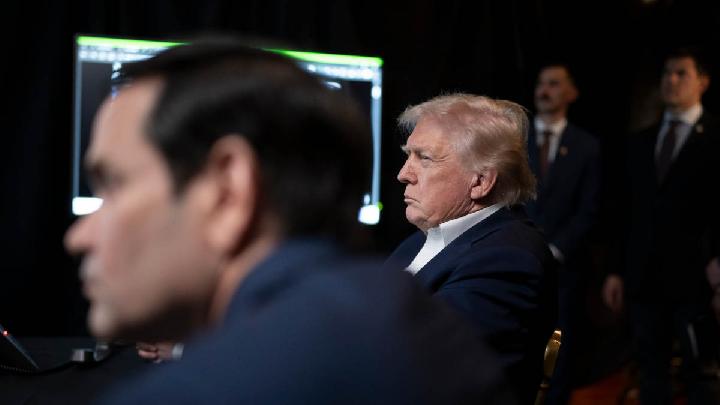
March 23, 2026 | 11:17 pm
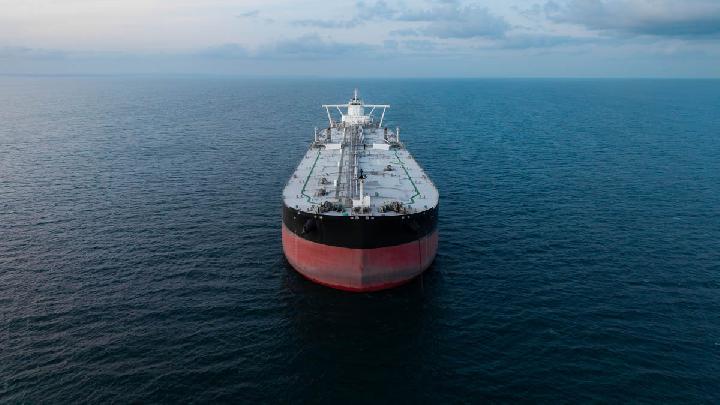
TEMPO.CO, Jakarta - Stock markets dipped across the board early on Monday, with traders nervous after another weekend yielded no real signs of de-escalation in Iran or the wider Gulf region or a reduction in the rising energy prices the conflict is causing.
Several of the major Asian markets dipped by 3 percent or more, while Europe's main indices all shed in the region of 2 percent in morning trading, government bond yields were up, and even the traditional safe havens gold and silver shed more than 6 percent and 7 percent of their values.
Where did key stocks and prices stand on Monday?
Major indices were in the red almost across the board after a weekend of inactivity, with some of the key stats as follows:
- Germany's DAX dipped during the morning and was down by just over 2 percent as of midday local time
- France's CAC 40 was also roughly 2 percent down, while the FTSE 100 in London logged similar numbers until a small spike recouped much of the losses late in the morning
- Japan's benchmark Nikkei 225 closed down 3.5 percent at 51,515.49, having dipped lower still in the course of the day
- South Korea's Kospi nosedived by roughly 6.5 percent to 5,405.75
- Hong Kong's Hang Seng was down 3.5 percent, while the Shanghai Composite shed 3.6 percent in a single day
- Taiwan's Taiex shed 2.5 percent while Australia's A&P/ASX 200 fared somewhat better, sliding by just 0.7 percent
- Gold and silver, major gainers in recent years, were both in freefall, down almost 7 percent and 8 percent, respectively
- Crude oil was one of the few prices to rise, but only marginally
- Western governments' 10-year bond yields also showed modest gains across the board
Germany's DAX, like most major Western markets, has been sliding rapidly throughout the month since the U.S. and Israeli strikes on Iran that killed Supreme Leader Ayatollah Ali Khamenei and many other senior officials starting on February 28.
The main German index slipped below 22,000 points on Monday, having traded higher than 25,000 prior to the first attacks on Tehran. That's a dip of more than 12 percent. It's now reached its lowest ebb since early April last year, in the aftermath of the panic caused by U.S. President Donald Trump's so-called "Liberation Day" tariffs imposed on most of the world, including Europe.
France's CAC 40 has also shed 11 percent of its value in a month.
The UK's FTSE 100 has fared slightly better, sliding 6.67 percent in a month, perhaps in part because of the UK's own oil resources. U.S. markets have slid more or less in line with the values seen in the UK, with the Dow Jones down about 6.6 percent and the S&P 500 shedding almost 5 percent of its value in that period.
Strait of Hormuz still blocked, no real signs of regional de-esclation
Monday's slide comes after Trump's weekend threat that the U.S. would "obliterate" Iran's power plants unless it fully opens the Strait of Hormuz within 48 hours, which prompted Tehran to say that it would respond to any such strikes by targeting U.S. and Israeli energy and infrastructure assets in the region.
Earlier on Monday, the executive director of the International Energy Agency, Fatih Birol, also warned that the current economic instability caused by the war with Iran had the potential to prove more severe than the two oil shocks of the 1970s and the aftermath of Russia's 2022 invasion of Ukraine combined.
"This crisis as things stand is now two oil crises and one gas crash put all together," Birol said, describing the situation as a "major, major threat" to the global economy.
The rising energy prices are also confouding investors' hopes of likely interest rate cuts, which they previously anticipated in the course of this year, because higher fuel costs apply inflationary pressure that makes it riskier for central banks to reduce the cost of borrowing.
Read: India Can Withstand Middle East Turmoil, Modi Tells Parliament
Click here to get the latest news updates from Tempo on Google News
Antam Gold Falls Rp50,000 to Rp2,843,000 per Gram on Monday
7 jam lalu
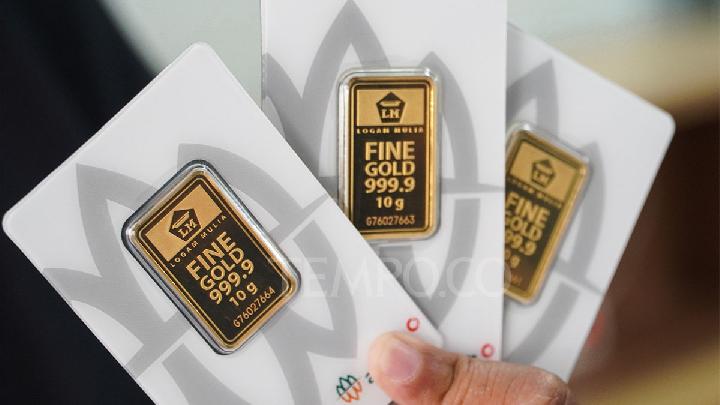
The price per gram fell about US$3.25 to Rp2,843,000, reflecting global market volatility amid rising geopolitical and economic risks.
Fiscal Developments to Shape JCI Movement This Week
7 hari lalu
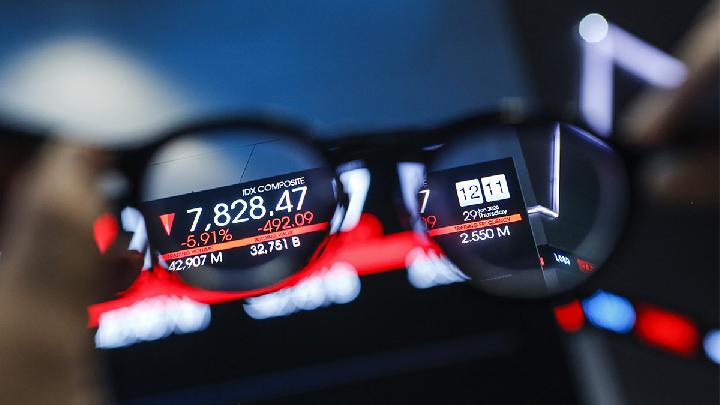
The IPO stated that the combination of fiscal dynamics and monetary policy direction will be the main factors shaping the movement of the JCI.
JCI Slips as Geopolitical Tensions Over Iran-Israel-US Escalate
21 hari lalu
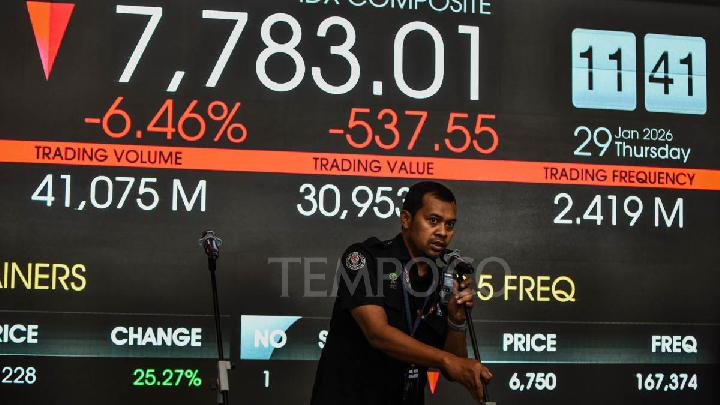
The weakening of the JCI was triggered by the intensifying conflict between Iran, the United States, and Israel.
OJK Imposes Rp11.05 Billion Fine Over Stock Market Manipulation
30 hari lalu
Indonesian Financial Services Authority (OJK) imposes fines totaling Rp11.05 billion on four stock market manipulators.
Purbaya Says Rupiah Volatility Hard to Control, Focus on Economic Growth
39 hari lalu

Purbaya said that solid and sustained growth would boost market confidence, which in turn would be reflected in capital market performance.
A Battle of Influence Amid Market Distress
40 hari lalu

Two figures stand behind the resignations of top officials of the Indonesia Stock Exchange and the Financial Services Authority.
Why Indonesia's Stock Market Volatility Is Likely to Persist
40 hari lalu
High stock market fluctuations are predicted to continue for the next two to three months.
State Secretary Details Prabowo's Talks with 22 Business Leaders
40 hari lalu

Minister Prasetyo Hadi said the talks covered developing labor-intensive sectors and boosting Indonesia's global competitiveness.
Indonesia's Bonds Remain Attractive Despite Market Volatility
41 hari lalu

BNI Sekuritas recommends combining government bonds and money market instruments as a portfolio buffer amid global and domestic uncertainties.
Stock Market Recap: JCI Weakens 4.73%, Capitalization Falls
43 hari lalu
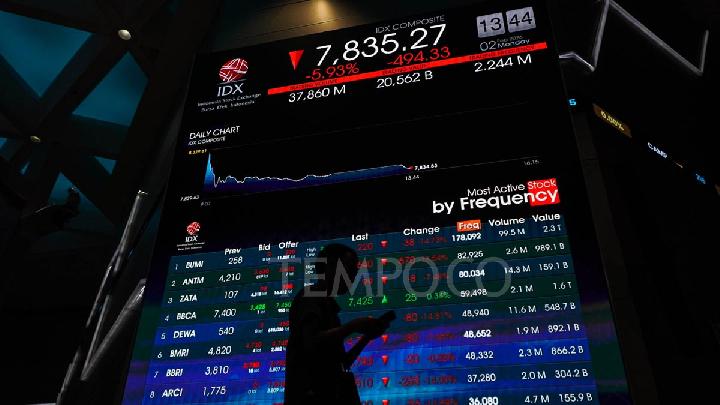
On Friday afternoon, February 6, 2026, the Jakarta Composite Index (JCI) closed lower at 7,935.26.